
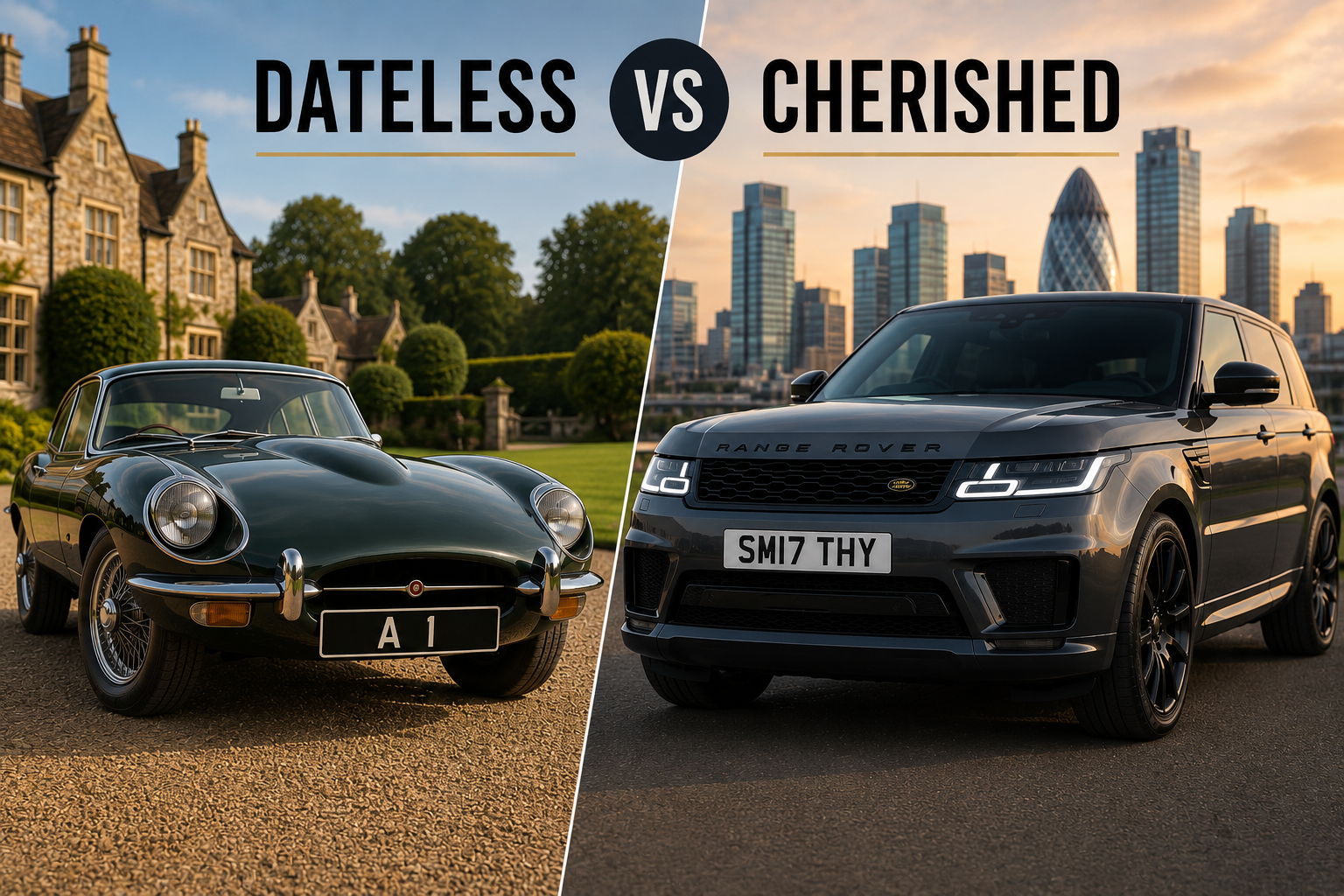
Many people mix up dateless and cherished number plates without realising they're quite different. If you're looking to buy, knowing the difference can save you time and money. This guide breaks down the key points in dateless vs private plates, explains cherished registration meaning, and highlights the difference between personalised and dateless plates. By the end, you'll know which option suits your style and budget best. For more information, check out this comprehensive guide on dateless number plates.
What Are Dateless Number Plates?
Dateless number plates are the oldest style of registration in the UK, and they're pretty special. Unlike modern plates, they don't contain any year identifier, which means you can't tell when a vehicle was first registered just by looking at them.
These plates follow simple formats like A 1, AB 123, or ABC 1. They were issued between 1903 and 1963, making them genuinely vintage. The beauty is that you can put them on any vehicle, regardless of age. Got a brand new motor? A dateless plate will fit perfectly. Driving a classic from the 1980s? Same story.
Most people love them for their clean, timeless look. There's something elegant about a simple combination that doesn't scream a specific era. Plus, because the DVLA stopped issuing new dateless formats decades ago, there's a limited supply. That scarcity adds to their appeal and often their value too.
Pros and Cons of Dateless Plates
Here's what you need to know before buying. Dateless plates offer complete freedom when it comes to transferring between vehicles. Since they don't show an age, you'll never run into restrictions about putting them on older or newer cars. That's a massive advantage.
They also tend to hold their value really well. Some even appreciate over time, especially shorter combinations or those with desirable letters. The classic appearance suits everything from vintage Jaguars to modern Range Rovers.
But there's a flip side. Dateless number plates usually cost more upfront than other private registrations. The limited supply means sellers can command higher prices. You'll also find fewer options available compared to modern formats.
Finding exactly what you want can take patience. If you're after specific initials or numbers in a dateless format, you might need to wait or compromise. Still, many buyers reckon the prestige and flexibility are worth the extra investment.
Dateless vs Private Plates Explained
This is where people get confused, so let's sort it out. When comparing dateless vs private plates, you're actually looking at a specific type within a broader category. Private plates are any registration you choose and purchase yourself, rather than accepting whatever the DVLA assigns to your vehicle.
Dateless plates are one type of private plate. Other types include prefix plates (like A123 ABC), current-style plates (AB12 ABC), and suffix plates (ABC 123A). Each format has different rules about which vehicles they can go on.
The key difference is flexibility. Dateless registrations can go on any vehicle because they don't reference a year. A prefix plate from 1999, showing a 'T' for example, can't legally go on a 1998 car. That restriction doesn't exist with dateless formats.
Think of it this way: all dateless plates are private plates, but not all private plates are dateless. It's like saying all golden retrievers are dogs, but not all dogs are golden retrievers. Simple when you break it down.
Exploring Cherished Number Plates
Now we'll look at the wider world of cherished registrations and what that term really covers.
Cherished Registration Meaning
So what's the cherished registration meaning? It's actually simpler than you might think. A cherished plate is any registration that someone has kept, transferred, or purchased because it holds value to them, either personal or financial.
The term covers all types of private registrations. Your mate's plate spelling his name? That's cherished. A dateless plate someone bought as an investment? Also cherished. Even a random combination that someone just prefers to their original registration counts.
Basically, if you've chosen it specially rather than accepting what came with your vehicle, it's a cherished plate. The DVLA uses this term broadly to describe the entire market of private registrations. You can browse available options at DVLA Registrations to see the full range.
The word "cherished" reflects how owners value these plates. They're not just random letters and numbers anymore. They represent identity, status, memories, or smart investments. That emotional or financial attachment is what makes them cherished.
Advantages and Disadvantages of Cherished Plates
Cherished number plates come with some brilliant benefits. First, you get massive choice. Because the term covers all private registrations, you can find combinations to suit any budget, from £250 to £250,000. That variety means almost everyone can find something they like.
They're also great for personalisation. Want your initials? Your profession? A meaningful date or word? Chances are there's a cherished plate that fits. Modern formats give you loads of creative options for spelling names and phrases.
Many cherished plates work as solid investments too. Popular combinations appreciate over time, and you can sell them on when you're ready. Some people build entire portfolios of registrations as financial assets.
The downsides? Well, not all formats offer the same flexibility as dateless plates. If you buy a 2015-registered plate, you can't put it on a 2010 vehicle. Those age restrictions can limit your options down the line.
Some combinations also look dated. A plate clearly showing it's from 2005 might not have the timeless appeal you're after. And whilst there's loads of choice, finding the perfect plate at the right price still takes effort. You can read more about dateless versus dated plates for a deeper comparison.
Difference Between Personalised and Dateless Plates
Right, let's tackle another common mix-up. The difference between personalised and dateless plates is about purpose versus format. Personalised plates are registrations chosen because they mean something specific to the owner. They might spell a name, show initials, reference a hobby, or represent a business.
Dateless plates are a format type that doesn't include age identifiers. Now here's the thing: a plate can be both, either, or neither. Confused? Let me explain with examples.
Take "SM17 THY" - that's personalised (spells Smithy) but not dateless (shows 2017). Now look at "SMI 1" - that's both personalised (initials) and dateless (no year). A random combination like "ABC 123D" might be dateless-style but not particularly personalised if it doesn't mean anything to the owner.
So personalised describes why you chose it, whilst dateless describes what format it follows. You might want a dateless plate for the flexibility and classic look, even if it doesn't spell anything. Or you might prioritise personalisation and accept a modern format to get the exact combination you want.
Making the Right Choice
Time to figure out which option actually suits your needs and budget best.
Tips for Potential Buyers
Start by setting a realistic budget. Dateless number plates typically cost more, often starting around £1,000 and climbing into six figures for short combinations. Cherished plates in modern formats offer more affordable entry points, sometimes from £250.
Think about your long-term plans. If you change vehicles regularly, a dateless plate makes life easier. You won't need to check compatibility each time. But if you're happy with your current car and don't plan to switch soon, a modern cherished plate works perfectly fine.
Consider what matters most: flexibility, appearance, or meaning. Rank these priorities before you start searching. Someone wanting ultimate flexibility should lean toward dateless. Someone wanting their exact name might need to accept a modern format.
Don't rush the decision. Good plates hold their value, so there's no pressure to buy the first thing you see. Browse regularly, compare prices, and wait for the right combination at the right price. Patience often saves you hundreds or even thousands of pounds.
Investment Potential of Private Plates
Both dateless and cherished number plates can make smart investments, but they work differently. Dateless plates, especially short combinations, tend to appreciate steadily. A plate like "A 1" or "F 1" will always be desirable because they're the ultimate in simplicity and rarity.
Cherished plates in modern formats can also gain value, particularly those spelling popular names or common words. The key is buying combinations with broad appeal, not just ones that mean something to you personally. Think about what thousands of other people might want in five or ten years.
Short plates beat long ones for investment. Three characters will almost always outperform seven when it comes to appreciation. Classic initials (JB, AB, MC) hold value better than obscure combinations.
Remember, plates don't cost anything to store once you own them. You can keep them on retention certificates for years, waiting for the right buyer or the right moment to use them. That makes them a fairly low-maintenance investment compared to property or stocks.
Final Thoughts on Number Plates
Choosing between dateless and cherished number plates doesn't have to be complicated. Dateless gives you timeless style and complete flexibility, whilst other cherished formats offer more variety and often better value for specific personalisation.
Both types can enhance your vehicle's appearance and potentially grow in value. The right choice depends on your priorities, budget, and how you plan to use the plate. Take your time, do your research, and pick something you'll be proud to display.
Whether you go for the classic elegance of dateless number plates or the personal touch of a modern cherished plate, you're adding character to your vehicle and possibly making a smart investment. That's a win either way.