
Written by Oliver Wright, Private Registrations Specialist at Right Reg — 25 years buying, selling, valuing and transferring UK number plates.
Last updated: 6th October 2026
TL;DR: A cloned number plate is a copy of your registration fitted to another vehicle, usually a similar make, model and colour. You normally find out when fines arrive for places you have never been. Drivers made 11,394 reports to DVLA about this kind of fine in 2025, the highest figure on record. If it happens to you: report it to the police and get a crime reference number, challenge every notice with evidence before its deadline, and write to DVLA quoting the crime reference. In bad cases DVLA can give your car a different registration. If the cloned number is a private plate, read the private plate section before you agree to anything, because you have options a standard plate does not.
Contents
- What is a cloned number plate?
- How common is number plate cloning in 2026?
- How can I tell if my number plate has been cloned?
- What should I do if my plate has been cloned?
- How do I challenge each type of fine?
- What if the cloned number is a private plate?
- How do I avoid buying a cloned car?
- How can I make my plates harder to clone?
- Frequently asked questions
What is a cloned number plate?
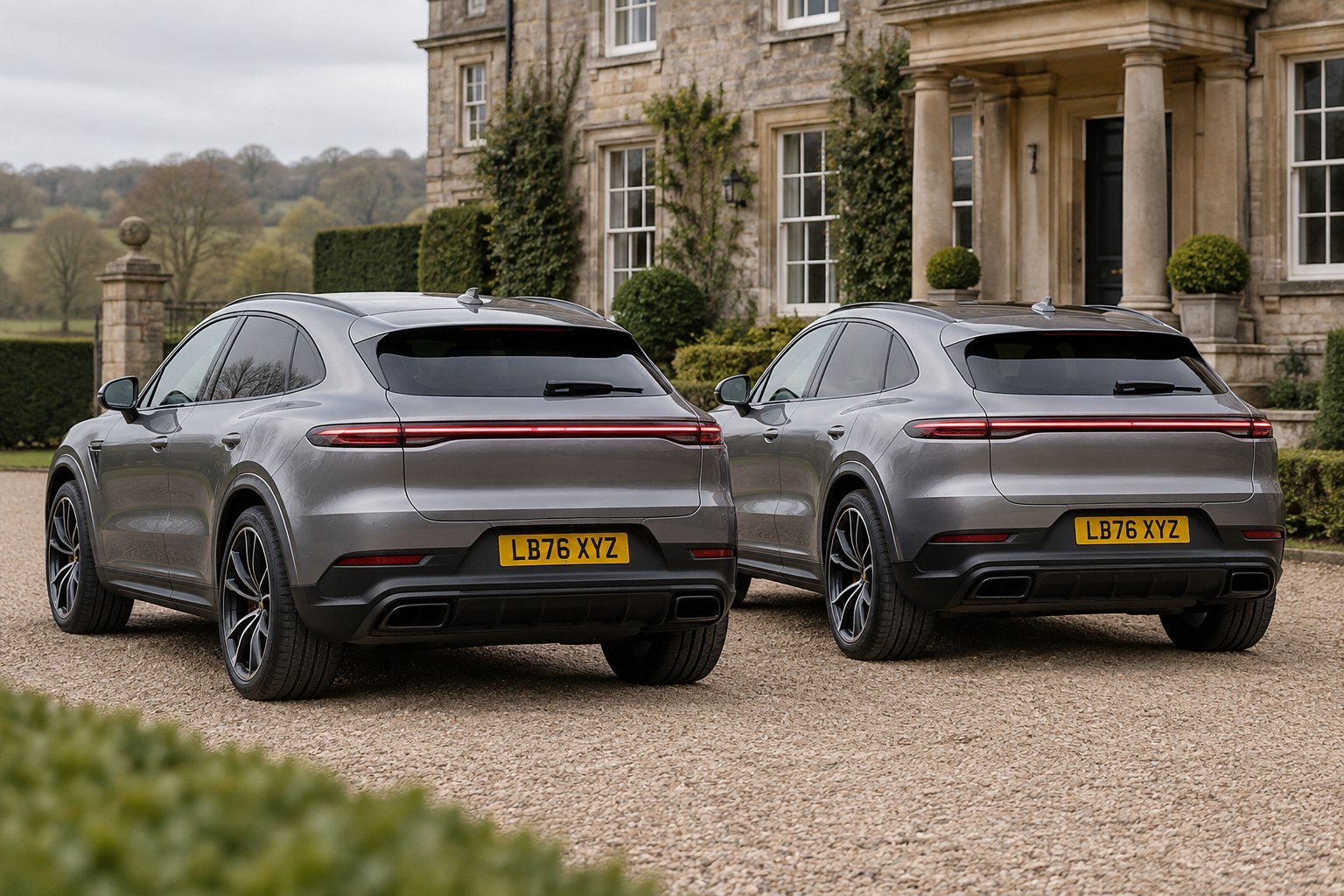
A cloned number plate shows a real registration that belongs to a different, legitimate vehicle. DVLA describes cloning in its guide INF104, Vehicle registration numbers and number plates as "copying the identity of a similar (not-stolen) vehicle already on the road". Criminals look for a car of the same make, model and colour as the one they are driving, then fit plates showing that car's registration. To a camera, or to a police officer at a glance, the vehicle looks legal.
Cloning is one of three kinds of illegal plate the government is now targeting. They are easy to mix up, and the fix is different for each.
| Type | What it is | Who usually gets hurt | What the owner does |
|---|---|---|---|
| Cloned plate | A copy of a real registration on another vehicle | The genuine keeper, who receives the fines | Police report, challenge each notice, write to DVLA |
| Stolen plate | Your actual plates taken off your car | You, then whoever receives the fines from the car they end up on | Police report, replacement plates from a registered supplier |
| Ghost plate | A plate altered with film or coatings so cameras cannot read it | Other road users, because the driver avoids enforcement | Not a victim issue: using one is an offence |
Stolen plates and cloned plates often overlap. A thief who steals your plates may fit them to a similar car, so the fines that follow look exactly like cloning. Report a stolen plate straight away, even if no fines have arrived yet.
How common is number plate cloning in 2026?
It is rising every year. DVLA's figures, reported in April 2026, show 11,394 reports in 2025 from drivers who received fines or penalties for a vehicle that was not theirs. That was up 9% on 10,463 in 2024 and up 54% on 7,377 in 2020, according to figures reported by the Daily Mirror. The same report says DVLA let victims change their registration in 163 cases in 2025 to stop the flood of fines.
Those figures come with a caveat. As the BBC noted when reporting the 2024 figure, they also include cases where a camera simply misread a plate. Not every report is a clone, but the trend is clear. The BBC also found that more than 25,000 Dart Charge penalties were cancelled between 2020 and 2024 because of stolen or cloned plates.
The government has responded in two ways this year:
- Tougher penalties are under review. The consultation on motoring offences, published alongside the Road Safety Strategy in January 2026, asked whether driving with an incorrect, altered or false plate should carry penalty points and vehicle seizure. It closed on 11 May 2026. At the time of writing, the government is still analysing the responses.
- A new policing centre. On 5 September 2026 the Department for Transport announced it is funding a National Roads Policing Coordination Centre to coordinate police action against cloned, ghost and missing plates across England. The announcement confirms that drivers with incorrectly displayed plates can be fined up to £1,000.
How can I tell if my number plate has been cloned?
Most people find out by post. These are the signs to look for, roughly in the order they tend to show up.
- A penalty for a place you have not been. A parking ticket, bus lane fine or speed camera notice from a town you did not visit on that date.
- A charge for a zone you never entered. Clean air zone, ULEZ, congestion charge or Dart Charge penalties, especially if you have never driven there.
- Two places at once. A notice timed when you can prove your car was at home, at work or with you somewhere else.
- A photo that is almost right. The car in the camera image is the same model but has a different trim, wheels, roof, roof bars, stickers or damage. One victim interviewed by the BBC spotted that the cloned car lacked his sunroof.
- Police contact about an incident you know nothing about.
- A private parking company letter for a car park you have never used.
If you get one of these, ask for the photographs. Most notices either include an image or tell you how to view one online. The small differences between your car and the clone are often your best evidence.
What should I do if my plate has been cloned?
DVLA's guidance in INF104 sets out three steps. The police advice service Ask the Police says the same. Do them in this order.
- Report it to the police. Use 101, your force's website or the front desk of a police station. Some forces have a dedicated form; Avon and Somerset Police, for example, lets you upload the penalty notice and its images. Get a crime reference number. Everything else depends on it.
- Reply to every notice. Contact whoever issued each fine, explain that your vehicle has been cloned, give the crime reference number and send your evidence. Do not ignore a notice because you know it is not yours. The deadlines still apply to you as the registered keeper.
- Write to DVLA at DVLA, Swansea, SA99 1ZZ. Give your registration and the crime reference number. DVLA says it will keep a record of the matter for future reference.
Ask the Police is blunt about where the burden sits: it is up to you, as the registered keeper, to satisfy the issuer that it was not you or your vehicle. So build an evidence pack from day one.
| Evidence | Why it helps |
|---|---|
| Crime reference number | Shows the issuer that police are already involved |
| Photos of your car from every side | Lets the issuer compare trim, wheels, damage and stickers with their camera image |
| Proof of where your car was | Dashcam or home CCTV footage, fuel receipts, work car park records, tracker or telematics data |
| The issuer's own photos | Differences between the clone and your car are the strongest evidence you have |
| Your V5C details | Confirms the make, model and colour DVLA holds for your registration |
| A dated log of every notice | Keeps track of deadlines when fines arrive from several issuers |
It is worth telling your insurer as well, so that any incident involving the clone is not wrongly put down to you.
How do I challenge each type of fine?
Each type of notice has its own route and its own deadline. Missing one is how a clone ends up costing you money. Use the crime reference number every time.
| Notice | Who sends it | Deadline that matters | What to do |
|---|---|---|---|
| Notice of Intended Prosecution (speed or red-light camera) | Police | Usually sent within 14 days; the Section 172 notice must be returned within 28 days | Return the Section 172 notice within 28 days. Explain that your car was not there, and give the crime reference and your evidence. Ignoring it can lead to court. |
| Penalty Charge Notice (council parking, bus lane, banned turn) | Local council | 28 days, after which a charge certificate adds 50% | Make a formal challenge to the council with your crime reference and photos. Challenge rather than paying just to get the discount. |
| PCN for a road charge (Dart Charge, London congestion charge, ULEZ, low emission zone) | National Highways or TfL | 28 days | Challenge through the issuer's own process, quoting the crime reference |
| Clean air zone charge outside London | The local council running the zone | Check the notice | Challenge with the council, using the same evidence |
| Private parking charge | A private car park operator | Check the letter | Appeal to the operator with your evidence and crime reference |
| Police contact about another incident | Police | As requested | Give the crime reference and your evidence. Answer promptly. |
The deadlines above come from GOV.UK's guidance on speeding penalties and on parking fines and penalty charge notices. The rules are different in Scotland and Northern Ireland, so check the notice itself.
Trade tip: if fines are arriving from several issuers, keep one log with the issuer, notice number, date of the alleged offence, deadline and date you replied. When you write to DVLA, or ask it for a new registration, a complete log shows the pattern quickly.
What if the cloned number is a private plate?
A cloned private plate needs more thought than a standard one, because the number itself has value. Here is what changes.
DVLA's fix may not suit you. When cloning gets out of hand, DVLA can give the car a different registration. DVLA told the BBC that, where appropriate, this would be an age-related number. The keeper pays for the new physical plates. On a car with a standard registration, that is a clean break. If the number being cloned is your private plate, think before you accept, because the point is to keep the private number safe, not to swap it for a random one.
You can move the number off the car yourself. A private number can be taken off a vehicle and kept on a V778 retention document for £80. The car goes back to its original registration, and you keep the right to the private number for 10 years. Our guide to keeping a private plate without a car explains the process. In our view, if a clone is fixed to a number that is no longer on your car, new fines generated by the clone should no longer lead back to your vehicle. Talk to the police and DVLA first, though: retention does not remove the clone from the road, and fines already issued still need challenging.
Do not hand the clone your paperwork. GOV.UK warns sellers never to share a scan or photo of a V750 or V778 online, because the details could be used to put the number on another vehicle. If you are selling a private plate, send buyers a photo with the reference number covered. Our guide to selling a private number plate covers how to do this safely.
Keep it legal yourself. INF104 says that if you display a number incorrectly, the registration may in some cases be permanently withdrawn, with no refund. Altered spacing or decorative bolts do not cause cloning. But they do make you look like part of the problem when police are checking plates by hand. Our guide to number plate spacing laws explains what is allowed.
How do I avoid buying a cloned car?
The flip side of cloning is the stolen car that has been given a legitimate car's identity and then sold. If you buy one, the police can recover it for its real owner, leaving you out of pocket. GOV.UK's checks for buying a used vehicle are your protection.
| Check | How | What a clone looks like |
|---|---|---|
| DVLA vehicle details | Get vehicle information from DVLA using the registration | Make, colour or engine size do not match the car in front of you |
| MOT history | Check MOT history | Mileage or recorded faults do not fit the car's condition |
| V5C watermark | Hold the log book up to the light | No "DVL" watermark |
| V5C serial number | Check the number on the front | Between BG8229501 and BG9999030, or BI2305501 and BI2800000: these may be stolen blanks, so call the police |
| VIN and engine number | Compare the car with the V5C | Any mismatch, or a VIN plate that looks tampered with |
| Address | See the car at the address on the V5C | The seller wants to meet in a car park or deliver the car to you |
If a car with a private plate fails any of these checks, walk away, however good the plate is. The right to a private number goes with the paperwork, not the car. A cloned car's paperwork gives you nothing.
How can I make my plates harder to clone?
You cannot stop someone copying a number they have seen on the road, but you can make your plates harder to steal and your case easier to prove.
- Fit theft-resistant plates or security screws. GOV.UK says theft-resistant number plates make it harder for someone to remove your plates quickly and reuse them. Ask a registered supplier.
- Only buy plates from a registered number plate supplier. A registered supplier has to see original documents proving your name and address, plus a document showing you are entitled to the number, such as a V5C, V750 or V778. GOV.UK lists the documents a supplier must check. A supplier who does not ask is the kind of supplier who makes plates for criminals.
- Check your own plates are marked properly. Plates fitted since 1 September 2021 must show the British Standard BS AU 145e and the name and postcode of the supplying outlet, according to INF104. Correct marking makes it easier to tell your plates from fakes.
- Keep evidence as you go. A dashcam that records while the car is parked, or a home camera covering the drive, gives you ready-made proof of where your car was.
- Report stolen plates immediately, even if you have already replaced them. That gives you a crime reference number to use if fines arrive later.
Trade tip: a buyer of a private plate will be asked for exactly these documents when they get the plates made up. If you are buying a plate and someone offers to supply the physical plates "without the paperwork", treat that as a warning sign about the seller, not a convenience.
For the MOT side of plate rules, see how a number plate can fail an MOT. For everything else about buying a private number, start with our complete buyer's guide.
Frequently asked questions
How do I know if my number plate has been cloned?
The usual sign is a fine or penalty for somewhere you have not been, such as a parking ticket, bus lane fine, speed camera notice or clean air zone charge. Ask for the camera photos. If the car pictured has different trim, wheels or damage from yours, it is likely a clone.
What should I do first if my plate is cloned?
Report it to the police and get a crime reference number. Then reply to every notice before its deadline, explaining that the vehicle was cloned and sending your evidence. Finally, write to DVLA at DVLA, Swansea, SA99 1ZZ, quoting the crime reference number.
Will I have to pay fines caused by a cloned plate?
Not if you can show the vehicle was not yours. As the registered keeper, though, it is up to you to prove it, so reply to every notice on time with your crime reference number, photos of your car and evidence of where it was.
Can DVLA give me a new registration number if my car is cloned?
Yes, in some cases. DVLA let victims change their registration in 163 cases in 2025. DVLA says this would be an age-related number, and the keeper pays for the new physical plates.
Can a private number plate be cloned?
Yes. Any registration can be copied onto another vehicle. If your private number is cloned, you can take it off the car and keep it on a V778 retention document for £80, so the number is no longer on your vehicle. Speak to the police and DVLA before you do.
Is it illegal to drive with a cloned number plate?
Yes. Displaying a registration that does not belong to the vehicle is a criminal offence, and drivers with incorrectly displayed plates can be fined up to £1,000. In 2026 the government consulted on adding penalty points and vehicle seizure for false or altered plates.
How do I check a used car is not cloned?
Check the registration against DVLA's vehicle details and the MOT history, then compare the VIN and engine number with the V5C. Make sure the V5C has a DVL watermark and that its serial number is not in the stolen ranges GOV.UK lists. See the car at the address on the V5C.
Do I need ID to buy replacement number plates?
Yes. A registered number plate supplier must see original documents proving your name and address, and a document showing you are entitled to the number, such as a V5C, V750 or V778 retention document.
Official sources
- DVLA, INF104: Vehicle registration numbers and number plates
- GOV.UK, Displaying number plates and Getting number plates made up
- GOV.UK, Check a used vehicle you are buying
- GOV.UK, Speeding penalties and Parking fines and penalty charge notices
- Department for Transport, Crackdown on illegal number plates (5 September 2026)
- Department for Transport, Proposed changes to penalties for motoring offences
- Ask the Police, Receiving fines for a vehicle you know was not yours