
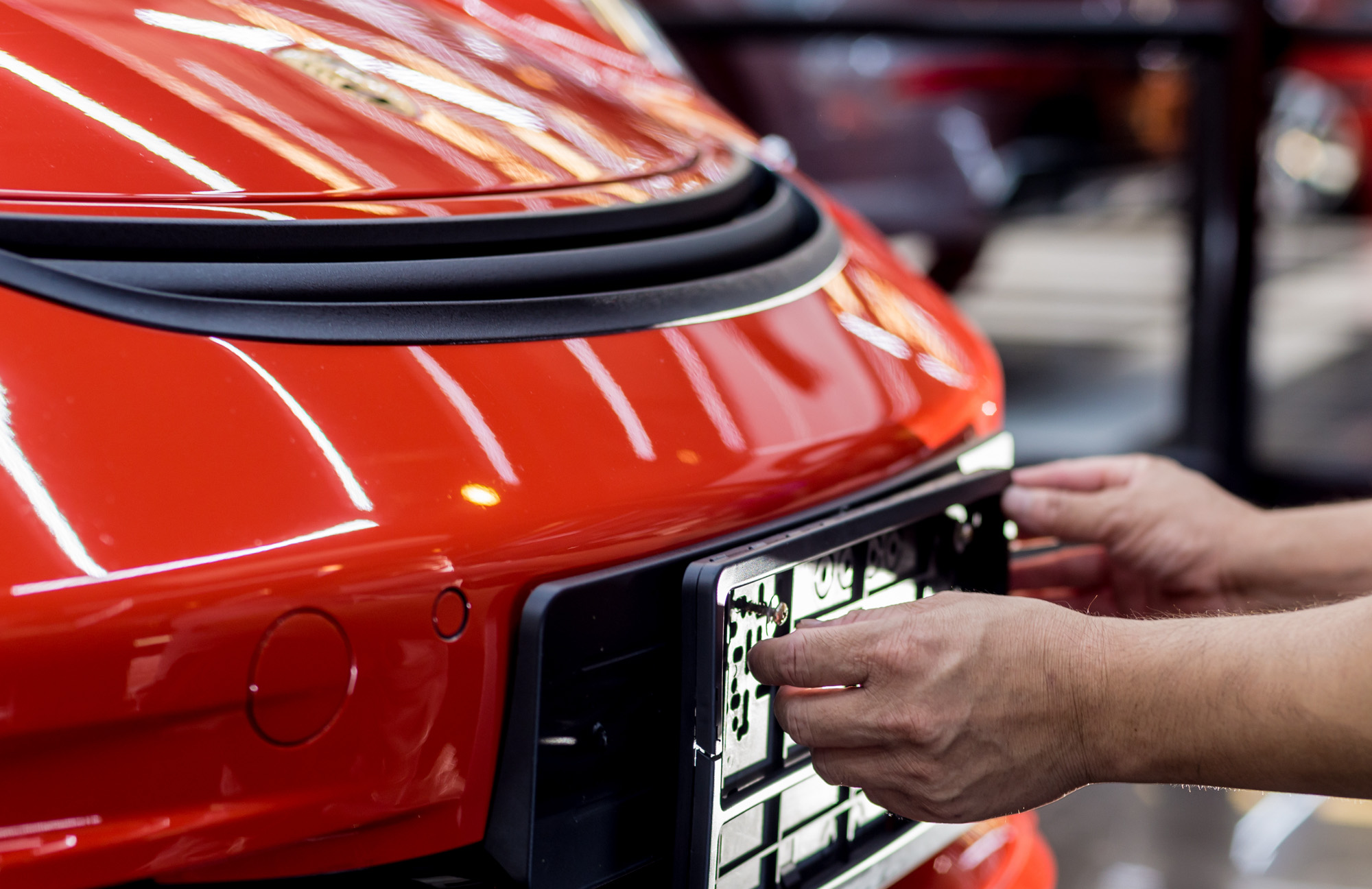
Private number plates are vehicle registrations chosen for their visual appeal, personal meaning, or investment potential. In the UK, you can buy them through DVLA auctions, specialist dealers like Right Reg, or private sellers — with prices ranging from under £300 for current-style plates to six figures for rare dateless registrations. This guide covers every step of the process: the different plate types, how to search, what you’ll pay, the DVLA transfer process, legal display rules, and how to spot a good investment.
Last updated: 30 July 2026 | Written by Right Reg — DVLA-recognised dealers since the 1970s
What Is a Private Number Plate?
A private number plate — also called a personalised registration, cherished plate, or personal plate — is a vehicle registration that has been purchased separately from the vehicle itself. Rather than accepting the random registration issued when a car is first registered, the owner chooses a specific combination of letters and numbers.
Private plates serve three main purposes:
- Personalisation — displaying your name, initials, birthday, or a meaningful word. See our full guide to personalised number plates for how to build a combination around a name.
- Privacy — concealing your car’s age from casual observers (particularly with dateless formats)
- Investment — certain rare registrations have historically increased in value over time
In the UK, all private plates are issued or regulated by the DVLA (Driver and Vehicle Licensing Agency). They follow the same legal standards as any other registration — the only difference is that someone has chosen the combination rather than having it assigned at random.
Types of Private Number Plates Explained
Understanding the different formats is essential before you start searching. Each type has its own look, price range, and rules about which vehicles it can be assigned to.
Dateless Number Plates
Format: A short combination of letters and numbers with no age identifier — for example, 1 A, AB 1, or ABC 123.
Dateless plates are the most sought-after format because they carry no visible year reference, meaning they can be assigned to any vehicle regardless of its age. A dateless plate won’t reveal whether you’re driving a brand-new car or a classic. The shorter the plate, the rarer and more valuable it tends to be.
Price range: £750 – £500,000+ Best for: Any vehicle, investment, prestige
Current-Style Plates (2001–Present)
Format: Two letters, two numbers, three letters — for example, AB51 XYZ.
The first two letters indicate the regional DVLA office, the two numbers show the age (changing every March and September), and the final three letters are random. These are the most affordable private plates because they’re the most common format. They’re ideal for creative spellings of names or words.
Price range: £250 – £5,000 Best for: Budget-friendly personalisation, spelling out names
Important: The age identifier (the two numbers) must match or pre-date your vehicle’s registration. You cannot use a current-style plate to make a car appear newer than it is.
Prefix Plates (1983–2001)
Format: A single letter followed by numbers, then three letters — for example, A123 BCD.
The initial letter indicates the year of registration (A = 1983, Y = 2001). Prefix plates are a good middle ground between affordability and classic appeal. Many owners of 1980s and 1990s cars choose them for a period-correct look.
Price range: £300 – £10,000 Best for: Cars from the 1980s–2000s, moderate budgets
Suffix Plates (1963–1983)
Format: Three letters, numbers, then a single letter — for example, ABC 123A.
The final letter indicates the year (A = 1963, Y = 1982). Suffix plates are popular with classic car enthusiasts and collectors. Some shorter suffix registrations carry significant value.
Price range: £500 – £15,000+ Best for: Classic cars, collectors
How Much Do Private Number Plates Cost?
The honest answer is: it depends entirely on the format, rarity, and desirability of the combination. Here’s a realistic breakdown:
| Plate Type | Typical Price Range | What Drives the Price |
|---|---|---|
| Current-style | £250 – £5,000 | How clearly it spells a name or word |
| Prefix | £300 – £10,000 | Brevity and letter combination |
| Suffix | £500 – £15,000+ | Age, rarity, and classic car demand |
| Dateless (longer) | £750 – £5,000 | Format and number/letter combination |
| Dateless (short, 2–3 chars) | £5,000 – £100,000+ | Extreme rarity and collector demand |
| Dateless (single digit/letter) | £50,000 – £500,000+ | The rarest plates available |
Additional Costs to Budget For
On top of the plate price itself, you’ll need to account for:
- DVLA assignment fee: £80 (online) or £80 (by post)
- Physical plates: £25–£60 from an approved supplier
- Dealer fees: Reputable dealers like Right Reg include their fee in the listed price — no hidden charges
- VAT: Included in prices from registered dealers; check with private sellers
Tip: If you’re buying at a DVLA auction, remember that the hammer price is subject to additional buyer’s fees. Set your maximum bid before the auction starts and stick to it.
Where to Buy Private Number Plates
There are three main routes to purchasing a private plate in the UK. Each has advantages depending on your budget, urgency, and how much support you want.
1. Through a Specialist Dealer (Recommended)
Dealers like Right Reg hold stock of thousands of registrations and can also source plates from other dealers and private sellers on your behalf. The main advantages are:
- Expert guidance on value and suitability
- The dealer handles all DVLA paperwork
- Protection against scams and title disputes
- Often the widest selection in one place
At Right Reg, we’ve been buying and selling private plates for over 30 years. We’re a DVLA-recognised reseller based in Lincolnshire, and we’re available six days a week by phone (01526 353111) or email.
If you are shopping for a name or word rather than a specific registration, start with our personalised number plates page, which breaks the search down by format and budget.
2. At a DVLA Auction
The DVLA runs several online auctions each year, each featuring around 1,500 registrations with starting prices from £70. Auctions are a good way to find newly released plates, but you’ll need to bid competitively and be comfortable with the auction process.
We can help you navigate DVLA auctions — from finding the right lots to advising on bid strategy and completing the paperwork if you win.
Search the next DVLA auction →
3. From a Private Seller
You can buy directly from someone who already owns a registration. This can occasionally yield a good deal, but carries more risk. Always verify that the seller genuinely holds the registration by checking the retention certificate (V750) and never pay without seeing documentation.
How to Buy a Private Plate: Step by Step
Whether you’re buying your first plate or your tenth, the process follows the same steps:
Step 1: Decide what you want Think about what you’d like the plate to say. Names, initials, and dates are the most popular starting points. Consider which format suits your vehicle — if your car is relatively new, a dateless or current-style plate will work; if you drive a classic, a prefix or suffix plate might be more appropriate.
Step 2: Search and shortlist Use our search tool to browse available plates. You can filter by format, price range, and style. If you can’t find exactly what you’re looking for, call us — we often have access to plates that aren’t listed online, and we can set up alerts for specific combinations.
Step 3: Check vehicle compatibility If the plate has an age identifier, make sure it’s the same age or older than your vehicle. Dateless plates skip this step entirely — they go on anything.
Step 4: Purchase Once you’ve chosen your plate, complete your purchase through our secure checkout or by phone. We’ll confirm the details and begin the transfer process.
Step 5: DVLA transfer We submit the transfer application to the DVLA on your behalf. The DVLA updates the vehicle record and issues an updated V5C (logbook) to the registered keeper. This typically takes 2–6 weeks.
Full transfer timeline and tips →
Step 6: Get your plates made Once the transfer is confirmed, take your new V5C to any DVLA-approved plate supplier to have the physical plates manufactured. The old plates must be destroyed.
Step 7: Notify your insurer You’re legally required to tell your insurance company about the registration change. Most insurers handle this at no extra cost.
Insurance and plate changes explained →
DVLA Rules and Legal Requirements
Private plates are subject to the same legal standards as any other UK registration. Breaking the rules can result in fines, MOT failure, and even the permanent loss of the registration.
Display Rules
Your plates must:
- Use the standard Charles Wright font — no stylised or italic characters
- Have the correct spacing between characters (no rearranging to spell words)
- Be made from reflective material (white front, yellow rear)
- Show the plate supplier’s name and postcode
- Not display any characters that have been altered, obscured, or rearranged
Age Restrictions
A private plate cannot make a vehicle appear newer than it is. For example, a "74" plate (representing vehicles registered from March 2024) cannot legally be displayed on a car first registered in 2020. Dateless plates are exempt from this rule — they can go on any vehicle.
What You Must Tell the DVLA
When you change a vehicle’s registration, the DVLA updates the V5C automatically as part of the transfer. You should also:
- Inform your insurance company
- Update any parking permits linked to the old registration
- Notify your breakdown cover provider
Full guide to number plate rules → Can a plate fail an MOT? →
Keeping Your Plate When You Sell or Change Your Car
You don’t lose your private plate when you sell your vehicle. You have two options:
1. Transfer it to your new car If you’re replacing one vehicle with another, we can arrange the transfer directly from one car to the next.
2. Place it on retention If you’re not ready to assign the plate to another vehicle, the DVLA will hold it on a retention certificate for up to 10 years (renewable). This costs £80 and means the plate stays in your name until you’re ready to use it again.
How to assign a plate to your vehicle →
Private Plates as an Investment
The UK private plate market is worth over £290 million a year, and certain registrations have delivered impressive returns over the decades. But not every plate is a good investment — here’s what to look for.
What Makes a Plate Valuable?
- Brevity — shorter plates are rarer and more desirable
- Clarity — plates that clearly spell a name or word hold value better
- Format — dateless plates command the highest premiums
- Demand — common names and popular initials drive competitive pricing
Realistic Expectations
Some plates have sold for hundreds of thousands of pounds, and many owners have seen healthy returns over 10–20 year holding periods. However, private plates are an illiquid asset — they can take time to sell, and values fluctuate with demand. They’re best viewed as a long-term holding rather than a short-term trade.
If you’re considering a plate as an investment, we’re happy to advise on which formats and combinations tend to hold their value.
Private plate investment guide → Most expensive UK plates ever sold →
How to Value a Private Number Plate
If you already own a private plate and want to know what it’s worth, we offer a free, no-obligation valuation service. Our team will assess your registration based on current market conditions, recent sale prices for comparable plates, and collector demand.
You can also sell your plate through Right Reg. We have access to a large pool of buyers and can handle the entire process from valuation to transfer.
Get a free valuation → Sell your plate → How plate valuations work →
How to Avoid Private Plate Scams
The vast majority of private plate transactions are straightforward, but scams do exist — particularly on peer-to-peer marketplaces. Protect yourself by following these rules:
- Always verify documentation — ask to see the V750 retention certificate or evidence that the plate is assigned to a vehicle the seller owns
- Never pay by bank transfer to an unverified seller — use a secure payment method or buy through a DVLA-recognised dealer
- Check the seller is legitimate — look for DVLA reseller recognition, company registration details, and genuine reviews
- Be wary of prices that seem too good — if a rare dateless plate is listed at a fraction of its market value, it’s likely a scam
- Use a reputable dealer — buying through an established dealer like Right Reg eliminates the risk of title disputes and fraudulent listings
Frequently Asked Questions
How do I buy a private number plate? Search for available plates through a dealer like Right Reg or at a DVLA auction, make your purchase, and the dealer or DVLA will handle the transfer to your vehicle. The process typically takes 2–6 weeks.
How much is a private number plate? Prices range from around £250 for current-style plates to six figures for rare dateless registrations. Most buyers find a plate they love for between £500 and £5,000.
Can I put a private plate on a leased car? Yes, but you’ll need permission from the leasing company first, and you must remove the plate before returning the vehicle. Read our full guide →
Do private plates affect insurance? You must tell your insurer, but most don’t charge for a registration change. A private plate won’t affect your premium. Read more →
Can I transfer a plate between vehicles? Yes. You can transfer a private registration from one vehicle to another through the DVLA. We handle this process for our customers at no extra charge.
What happens to my private plate if my car is scrapped? You should remove the plate from the vehicle (place it on retention) before the car is scrapped. Once a vehicle is destroyed, recovering a registration that was still assigned to it can be difficult or impossible.
Are private plates a good investment? Some plates have appreciated significantly over time, particularly short dateless registrations. However, they should be viewed as a long-term holding. We can advise on which formats tend to hold value best.
How do I sell my private plate? Contact us for a free valuation. We’ll assess your plate’s current market value and can list it for sale to our network of buyers, handling the entire process from marketing to DVLA transfer. Get a valuation →