
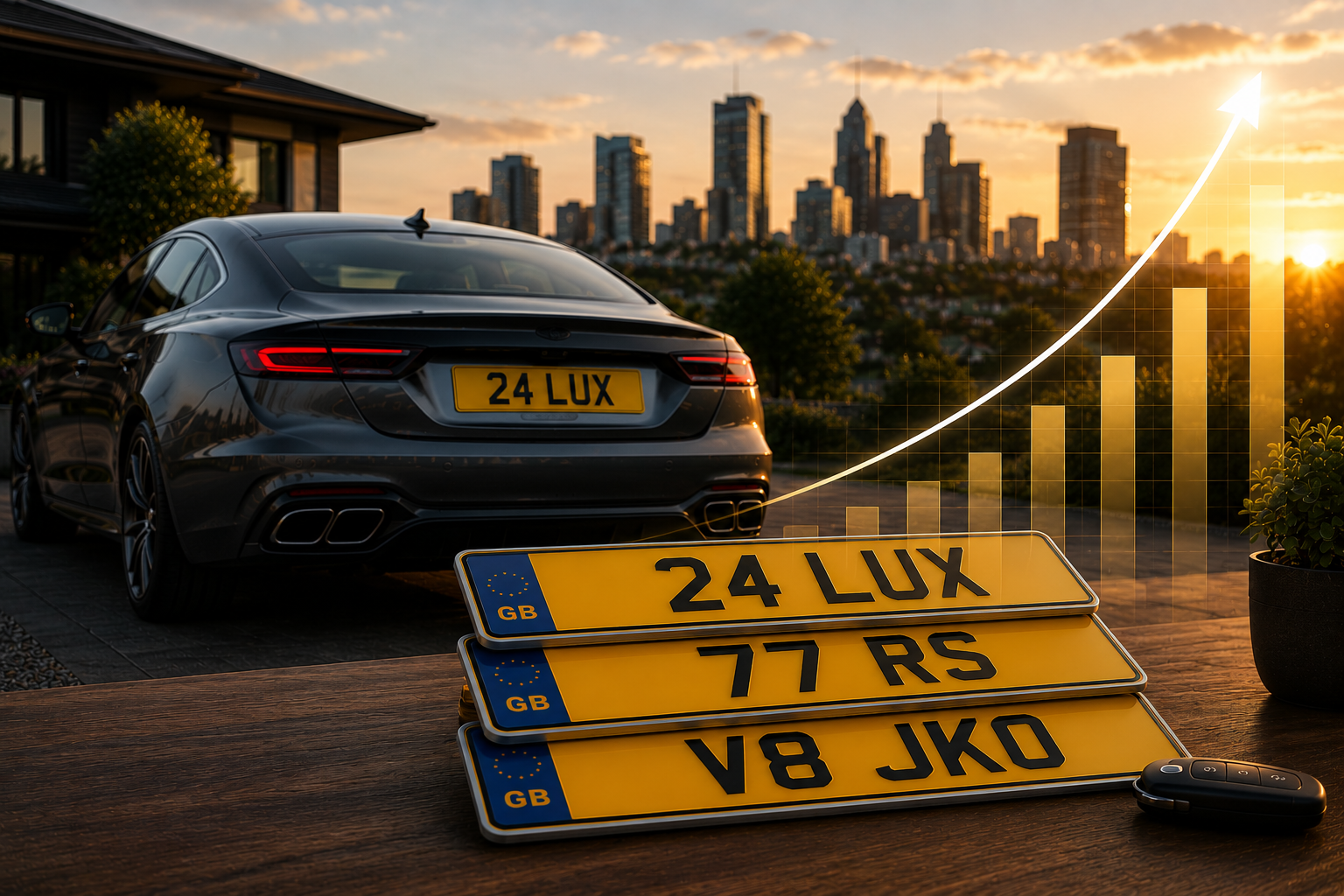
The market for private number plates has surged by £290 million in just the last year, shaking up the UK number plates scene. Auction sales have nearly doubled over the past decade, climbing from £24.7 million in 2015/16 to £44 million in 2024/25. At the same time, plate transfer fees jumped from £94.8 million to £133.6 million. If you're into vehicle personalisation or high-value number plates, these shifts reveal what's driving car registration trends right now.
What's Behind This Massive Growth in Number Plate Sales?
Let's be honest, when you first hear about someone spending thousands on a private number plate, you might think they're a bit mad. But here's the thing: the numbers don't lie, and they're telling us that more Brits than ever are seeing the value in personalised registrations. So what's changed?
The UK number plates market has always been there, quietly ticking along in the background. But over the past decade, something's shifted. We've seen auction sales growth that's nothing short of remarkable, and plate transfer fees that show people aren't just buying these plates as novelties anymore. They're treating them as legitimate investments, status symbols, and ways to make their motors truly their own.
Think about it. Your car probably looks pretty similar to hundreds of others on the road. Same model, same colour, maybe even the same trim level. But slap on a private plate that spells your name, your business, or something meaningful to you? Suddenly, you've got something that stands out in the Tesco car park.
Breaking Down the Numbers: Where's All This Money Coming From?
Right, let's get into the meat of it. The data we're looking at covers a ten-year period, and it's pretty eye-opening stuff.
Auction Sales Growth: Nearly Doubling in a Decade
Back in 2015/16, auction sales for private number plates brought in £24.7 million. Fast forward to 2024/25, and we're looking at £44 million. That's not just a gentle increase, that's a massive jump that shows people are willing to pay serious money for the right registration.
These auctions aren't just about vanity either. Some of the high-value number plates sold at auction have been genuine investments. Plates like "1 D" or "F 1" have sold for hundreds of thousands of pounds. When you see returns like that, it's no wonder more people are paying attention.
Plate Transfer Fees: The Hidden Revenue Stream
Here's something you might not have thought about: every time a private plate changes hands, there's a fee involved. And those fees have climbed from £94.8 million in 2015/16 to £133.6 million in 2024/25.
What does this tell us? Well, it means there's a thriving secondary market out there. People aren't just buying plates and keeping them forever. They're trading them, selling them on, treating them like assets. And why not? If you bought a plate five years ago for £500 and someone's offering you £2,000 for it now, you'd be daft not to consider it.
Why Are Private Number Plates So Popular Right Now?
You might be wondering what's fuelling this boom in vehicle personalisation. Let's look at a few key factors.
Status and Personal Branding
We live in an age where personal branding matters more than ever. Whether you're a business owner, an influencer, or just someone who takes pride in their appearance, your car's registration is part of your image.
A well-chosen private plate can communicate success, creativity, or personality before you've even stepped out of the vehicle. It's a conversation starter, a business card on wheels, and a way to stand out in a crowded world.
Investment Potential
Here's where things get really interesting. The car registration trends we're seeing suggest that private plates are becoming recognised as legitimate alternative investments.
Traditional investments like property or stocks can be complicated and require significant capital. But private number plates? You can get started with a few hundred quid, and if you choose wisely, you could see decent returns. Some plates have appreciated by 300% or more over a decade.
The best part? There's no annual tax (unlike property), no management fees (unlike many investment funds), and you can actually use your investment every day on your own car.
Limited Supply, Growing Demand
Basic economics, right? The DVLA only releases certain combinations, and once they're gone, they're gone. You can't make more "perfect" plates like single letters or low numbers. This scarcity drives value, especially as more people enter the market.
As the UK population grows and car ownership remains high, the pool of potential buyers keeps expanding whilst the supply of premium plates stays fixed or even shrinks.
How Do You Actually Buy a Private Number Plate?
If you're new to this, the process might seem a bit mysterious. Don't worry, it's actually pretty straightforward once you know the steps.
Buying from the DVLA
The DVLA runs regular auctions where they release new plates and sell off interesting combinations. You can attend in person or bid online. The advantage here is you're buying directly from the source, so there's no question about legitimacy.
For less sought-after plates, you can also search the DVLA's database and purchase instantly online. Prices start from a few hundred pounds for basic combinations.
Buying from Dealers and Private Sellers
There's a whole industry of dealers who specialise in private number plates. They hold stock, offer valuations, and can help you find exactly what you're looking for. The trade-off is you'll typically pay more than buying directly from the DVLA, but you get access to plates that have already been released and might not be available otherwise.
When buying from private sellers, make sure you do your homework. Check the plate's validity, ensure the paperwork is in order, and use secure payment methods. It's also worth getting a valuation from multiple sources before committing to a purchase.
What to Look For in a Good Investment Plate
Not all private number plates are created equal when it comes to investment potential. Here's what tends to hold or increase value:
Short plates: Generally, the fewer characters, the better. Single letters or numbers are the holy grail, but even three-character combinations can command premium prices.
Names: Common first names or surnames always have a market. Think "JOE 1" or "KHAN 1".
Words: Plates that spell out recognisable words (within the legal format) are popular. "BUY 1T" or "SOLD 1T" for estate agents, for example.
Dateless plates: These are the oldest format and often the most valuable because they don't give away your car's age.
Numbers: Low numbers, especially single digits, paired with any letter are consistently valuable.
The Process of Transferring a Private Plate
Once you've bought a plate, you'll need to actually put it on your vehicle. This is where those plate transfer fees come in.
The Transfer Process Step by Step
First, you'll receive a certificate of entitlement from the seller or the DVLA. This is basically proof that you own the rights to use that registration.
Next, you'll need to apply to transfer the plate onto your vehicle. You can do this online through the DVLA website, and it costs £80. Make sure your vehicle is taxed, has a valid MOT (if applicable), and is registered in your name.
The DVLA will send you new log book documents showing your private plate, and you'll need to get new physical plates made up to display on your car. Make sure these are made by a registered supplier and meet legal requirements.
The whole process usually takes about a week, though it can be quicker. Once complete, your old registration goes back into the DVLA system (you don't get to keep it).
Keeping Your Plate Off a Vehicle
Here's a tip that many new buyers don't know: you don't have to put your private plate on a car straight away. You can keep it "on certificate", which means you retain ownership without it being assigned to any vehicle.
This is perfect if you're buying as an investment, or if you're between cars. Just be aware that certificates do expire (usually after ten years), but you can renew them for a small fee.
Understanding the UK Number Plates Market Dynamics
The market for private number plates isn't just growing randomly. There are specific trends and patterns that savvy buyers should understand.
Seasonal Variations
Like many markets, number plate sales have seasonal patterns. The DVLA's auction schedule and new registration releases in March and September create peaks in activity. These are the times when new combinations become available, and when people buying new cars are thinking about personalisation.
Regional Preferences
Different parts of the UK show different preferences. London buyers often go for high-end, prestigious plates that signal wealth and status. In other areas, local pride might drive demand for plates with regional identifiers.
Economic Factors
When the economy's doing well and people feel confident, luxury purchases like private plates tend to increase. The recent growth we're seeing partly reflects broader economic confidence, at least among those with disposable income.
Interestingly, high-value number plates can sometimes perform well even during economic downturns, as wealthy individuals view them as stores of value similar to art or collectibles.
Legal Considerations and Common Mistakes to Avoid
Before you get too excited and drop thousands on a plate, let's talk about some important legal stuff and common pitfalls.
Legal Requirements for Display
Your plate must meet specific legal standards. The characters must be a certain size, use the correct font (Charles Wright), and be displayed on reflective material with a British Standard mark. You can't use fancy fonts, different colours, or add symbols or graphics.
You also can't display a plate that makes your vehicle appear newer than it is. So you can't put a 2024-style plate on a 2010 car, though you can do the reverse.
Common Buying Mistakes
The biggest mistake? Overpaying because you fell in love with a plate. It's easy to get emotionally attached, but try to stay rational about what you're spending.
Another common error is not checking the plate's history. Has it been involved in any legal issues? Is it actually available for transfer? A bit of research upfront can save massive headaches later.
Don't forget about the ongoing costs either. You'll need to pay for the physical plates themselves (usually £20 to £50), the transfer fee (£80), and potentially storage fees if you're keeping it on certificate.
Insurance and Security
Whilst you can't insure a number plate in the traditional sense, you should inform your car insurance company when you add a private plate. Some insurers want to know, and it might slightly affect your premium.
Security-wise, private plates can make your car more attractive to thieves, especially if it's obviously valuable. Consider additional security measures for high-value combinations.
The Future of Private Number Plates: What's Next?
Looking ahead, what can we expect from this market? Based on current car registration trends and the trajectory we've seen, there are a few predictions worth considering.
Continued Growth
All signs point to continued growth in the UK number plates market. As long as cars remain status symbols and people value personalisation, there'll be demand for private plates. The younger generation coming through seems just as interested in customisation as older buyers, which bodes well for long-term growth.
Digital Integration
We're seeing more online platforms making it easier to buy, sell, and value private plates. This increased accessibility could bring more buyers into the market, particularly younger, tech-savvy individuals who might not have considered private plates before.
Electric Vehicle Impact
As the UK transitions to electric vehicles, will private plates remain as popular? All indications suggest yes. In fact, EV owners might be even more inclined to personalise their vehicles to distinguish their Tesla from the dozens of others that look identical.
Investment Recognition
We're likely to see private number plates become more widely recognised as alternative investments. This could bring more serious money into the market, potentially driving prices higher for premium plates whilst also creating more liquidity in the secondary market.
Practical Tips for Getting Started
Right, so you're interested in buying a private plate. Whether it's for personal use or investment, here are some practical tips to get you started on the right foot.
Start with Research
Before spending a penny, spend some time browsing what's available and what different types of plates cost. Look at completed auction results to see what actually sells versus what people list for. This will give you a realistic sense of the market.
Check multiple dealers and compare prices for similar plates. The same combination might be listed at very different prices depending on who's selling it.
Set a Budget and Stick to It
It's easy to get carried away, especially at auctions where competitive bidding can drive prices up. Decide beforehand what you're willing to spend and don't exceed it. Remember to factor in the transfer fee and the cost of physical plates.
Think About Resale Potential
Even if you're buying for personal use, it's worth thinking about whether the plate will hold its value. Could you sell it in five years if your circumstances change? Plates with broader appeal generally hold value better than very specific or niche combinations.
Start Small
If you're new to this, you don't need to drop £50,000 on your first purchase. Start with something more modest to learn how the process works and how the market behaves. You can always upgrade to more valuable plates as you gain experience and confidence.
Join Communities
There are online forums and communities of number plate enthusiasts who share information, tips, and market insights. These can be goldmines of information for newcomers.
Real Stories: People Who've Benefited from Private Plates
Let's look at some real-world examples of how private number plates have worked out for people.
The Business Owner
Sarah runs a plumbing business in Manchester. Five years ago, she bought "PL55 UMB" for £800 and put it on her work van. She reckons it's been one of her best marketing investments. People remember her van, she gets comments about it, and it's helped build her brand. When she recently got the plate valued, she was told it's now worth around £1,500. Not a bad return, plus all the marketing value she's had from it.
The Collector
James has been collecting private plates for 15 years. He started with a plate for his own name that cost £400. Over time, he's built up a portfolio of about 20 plates, most kept on certificate. His total investment is around £25,000, and his collection is now valued at approximately £65,000. He treats it like a pension fund, planning to sell plates gradually as he gets older.
The Lucky Finder
Emma was browsing the DVLA database on a whim and found "EM11 LYS" (which spells her name, Emily) available for just £250. She bought it immediately. Two years later, someone contacted her offering £2,000 for it. She declined because she loves having it on her car, but it's nice to know she could cash in if she wanted to.
Is Now a Good Time to Buy?
With number plate sales surging and prices climbing, you might wonder if you've missed the boat. Should you wait for a correction, or is there still value to be found?
The Case for Buying Now
The market's been growing consistently for a decade, suggesting this isn't a bubble but a genuine shift in how people value personalisation and alternative investments. Good plates are becoming harder to find as more people enter the market, so waiting might mean missing out on combinations that appeal to you.
Interest rates on savings accounts, whilst better than recent years, still aren't spectacular. If you choose wisely, a private plate could offer better returns than leaving money in the bank.
The Case for Caution
Prices for some plates have risen quickly, and there's always a risk of overpaying at the peak of enthusiasm. The most expensive plates might be out of reach for average buyers, which could limit the pool of potential buyers when you want to sell.
Economic uncertainty could affect the luxury goods market, including private plates. If people tighten their belts, discretionary purchases might slow down.
The Balanced Approach
Probably the wisest approach is to buy something you genuinely like and would be happy to keep, but that also has reasonable investment potential. That way, you're not relying on making a profit, but you're positioned to benefit if the market continues to grow.
Don't put all your eggs in one basket. If you're investing, consider buying several mid-range plates rather than one very expensive one. This spreads your risk and gives you more flexibility.
Making Your Decision
At the end of the day, whether to buy a private number plate is a personal decision that depends on your circumstances, interests, and financial situation.
If you're passionate about cars, enjoy standing out, or run a business that could benefit from memorable branding, a private plate could be perfect for you. The fact that it might also appreciate in value is a bonus.
If you're purely looking at it as an investment, make sure you do thorough research and understand that, like any investment, there are risks as well as potential rewards. The market's been strong, but past performance doesn't guarantee future results.
What's clear from the £290 million surge in private number plates sales is that this market is healthy, growing, and showing no signs of slowing down. Auction sales growth and rising plate transfer fees tell us that people are buying, selling, and trading these registrations more than ever before.
The UK number plates market has matured from a niche interest into a mainstream form of vehicle personalisation with genuine investment credentials. Whether you're after high-value number plates as status symbols or modest combinations that reflect your personality, there's never been more interest or activity in this space.
So, are you ready to join the thousands of Brits who've already made the move into private plates? Whether you're buying your first registration or adding to a collection, the market's waiting for you. Just remember to do your research, set a budget, and choose something that makes you smile every time you see it on your car.
The rise of private number plates isn't just a trend, it's a shift in how we think about our vehicles and personal expression. And with the numbers showing consistent growth year after year, it looks like this is one market that's here to stay.