
The June 2026 DVLA number plate auction showed how strong the UK market remains for distinctive personalised registrations, with buyers competing for memorable names, words, initials, car-related plates and visually striking combinations. This original guide explains the auction results, what they mean, how DVLA auctions work, and how buyers can approach future personalised registration auctions with confidence.
June 2026 DVLA Auction Summary
The June 2026 DVLA number plate auction was a timed online sale that concluded on Tuesday 23 June 2026. The auction featured 2,000 newly released private registration numbers and produced a high sell-through rate, with 1,972 registrations sold. Total bidder spend reached £6,973,596, demonstrating continuing demand for premium personalised registrations in the UK market.
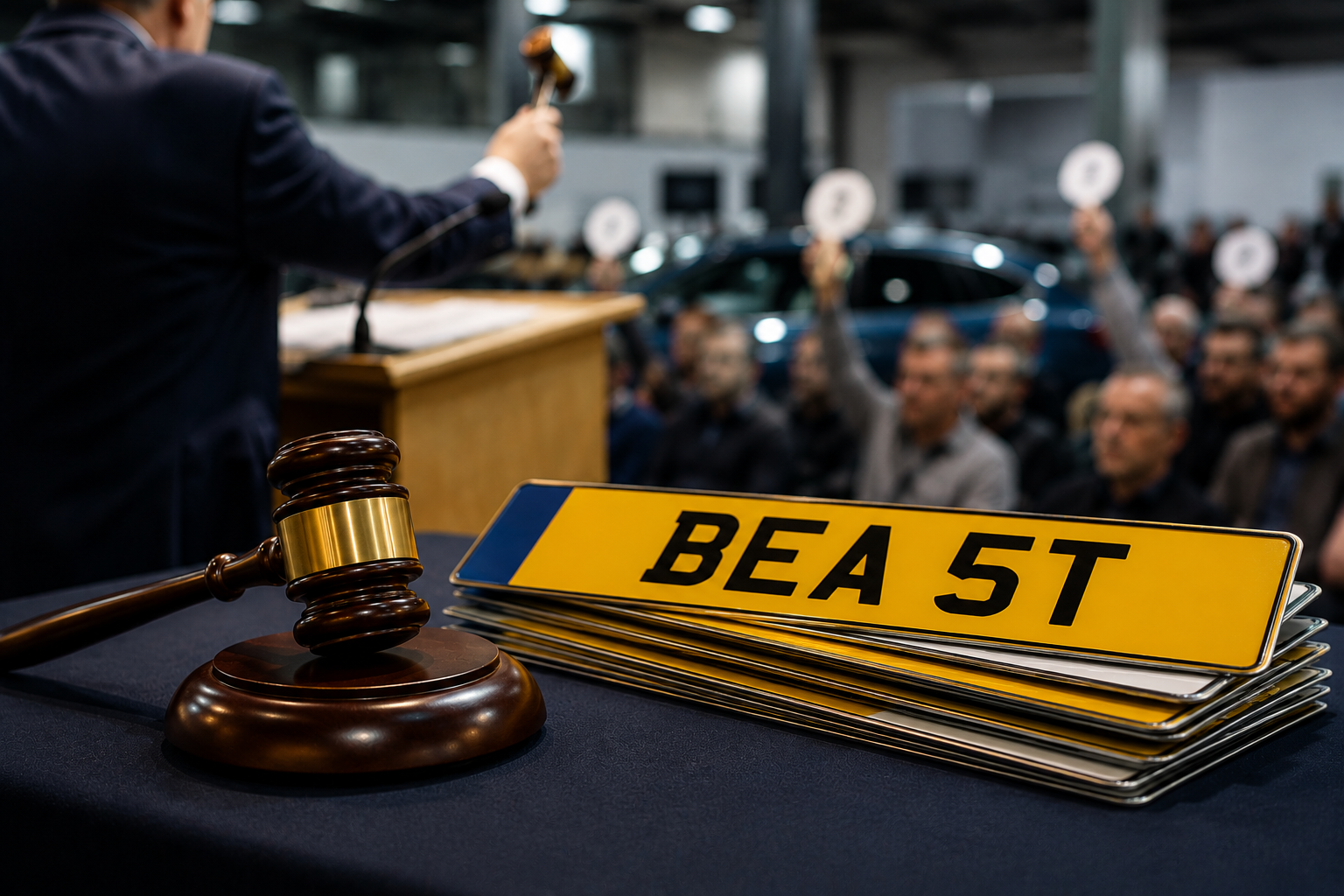
The highest reported all-in price was £137,424 for the registration BEA 5T. Its appeal is easy to understand: it reads like “BEAST”, a bold word with automotive, performance and personality associations. Registrations that resemble strong words, names or memorable phrases often attract wider interest because they are easier to understand at a glance. In a market where visual impact matters, BEA 5T had the ingredients that can drive intense bidding.
Although headline sales naturally attract attention, the wider result is just as important. A sale rate of 1,972 out of 2,000 lots means only 28 registrations remained unsold. That suggests the auction catalogue had broad appeal across different buyer types, from private motorists looking for personal initials to collectors targeting rare combinations and businesses seeking distinctive branding assets.
| Metric | Figure | Why it matters |
|---|---|---|
| Auction format | Timed online auction | Online bidding broadens access and can increase competition. |
| End date | 23 June 2026 | Creates a clear reference point for auction results and market analysis. |
| Registrations offered | 2,000 | A large catalogue gives buyers a wide range of budgets and styles. |
| Registrations sold | 1,972 | A strong sell-through rate indicates healthy demand. |
| Total spend | £6,973,596 | Shows the commercial strength of personalised registrations. |
| Top reported all-in sale | BEA 5T at £137,424 | Memorable word-style plates can command premium prices. |
What the June 2026 DVLA Auction Results Show
The June 2026 results show that demand for personalised registrations is not limited to a small group of high-value collectors. The breadth of sales suggests that buyers continue to see value in registrations for several reasons: personal identity, status, humour, vehicle presentation, business visibility and potential long-term collectability.
The strongest registrations usually share at least one of three qualities. First, they are easy to read. A plate that can be understood instantly is more desirable than one that needs explanation. Second, they have a clear personal or commercial connection. Initials, names, professions, brands, vehicle models and memorable words all create a reason to bid. Third, they are scarce. A registration that closely resembles a word or phrase cannot simply be recreated at will, so genuine substitutes may be limited.
One important lesson from the auction is that value is not always obvious from the starting price. Some registrations can appear modest at first glance but become highly competitive because they match a specific buyer group. A plate connected to a performance car, a business sector, a popular name, a surname or a phrase can attract unexpected attention. In timed online auctions, that competition can build steadily and then intensify near the closing period.
The auction also reinforces the importance of presentation. Personalised registrations are small pieces of text, but their value often comes from how people interpret them. A balanced combination of letters and numbers can make a plate look cleaner, more premium and more memorable. This is why some visually simple registrations outperform longer combinations that technically contain more characters or more obvious information.
Why the sell-through rate matters
A high sell-through rate is a useful indicator of demand across the catalogue. Premium auctions often include a mixture of low-start entries, mid-market initials, specialist combinations and headline lots. When almost all lots sell, it implies that buyers are active at multiple price levels rather than concentrating only on a handful of trophy registrations.
For anyone planning to bid in a future DVLA number plate auction, this matters because it shows that competition can appear across the catalogue. It is a mistake to assume that only the obvious headline plates will attract bidders. Initials, short formats, car-related references, business-friendly combinations and clean number patterns may all receive strong interest.
Why DVLA Number Plate Auctions Matter
DVLA number plate auctions are important because they provide a structured way for newly released personalised registrations to reach the market. Instead of selling every desirable registration at a fixed price, auctions allow demand to determine the final value. That makes the process particularly relevant for registrations that have broad appeal, unusual structure or premium potential.
For buyers, a DVLA auction can offer access to registrations that may not yet have passed through private hands. That can be appealing because the plate is being released directly through the official auction process. For collectors, this creates the opportunity to acquire a registration at the moment it first becomes available. For businesses, it can be a chance to secure a registration before it is resold in the secondary market.
Auctions also help reveal current market sentiment. When certain types of registrations repeatedly perform well, it tells buyers and sellers what the market values. Strong results for word-style plates, dateless marks, initials or vehicle-related registrations can influence expectations in private sales. In this sense, each DVLA number plate auction acts as a snapshot of demand.
DVLA auctions versus private sales
A DVLA auction is different from buying a registration from a private seller or dealer. In a private sale, the asking price is set by the seller and negotiation may be possible. In an auction, the final price is determined by bidder competition. This can produce bargains when interest is low, but it can also push popular registrations far beyond their guide price or reserve level.
Private sales may offer more time to consider a purchase, while auctions require preparation and discipline. Buyers need to understand the catalogue, assess comparable values, decide how much they are prepared to pay, and account for all additional fees before placing bids. The excitement of an auction can be useful, but it can also lead to overbidding if buyers do not set limits.
How DVLA Number Plate Auctions Work
A DVLA number plate auction allows registered bidders to compete for personalised registrations released into an auction catalogue. Recent auctions are commonly run as timed online events. In a timed online auction, each lot is available for bidding during a defined period, and bids can be placed electronically before the lot closes.
The basic process is straightforward. The auction catalogue is published, buyers review the registrations, bidders register for the auction, bids are placed, and the highest eligible bidder wins the registration when the lot closes. The winning bidder then pays the required amount, including applicable charges. Once the purchase process is complete, the registration can normally be assigned to a suitable vehicle or held on a certificate according to the relevant rules.
Hammer price versus total price
One of the most important details for bidders is the difference between the hammer price and the total amount payable. The hammer price is the winning bid before additional charges. The total payable may include VAT, assignment fees and auctioneer fees. Buyers should always calculate the likely all-in cost before bidding because the final bill can be noticeably higher than the headline bid amount.
This distinction is also important when comparing auction results. Some reports discuss hammer prices, while others use all-in prices. A registration reported at one figure in one context may appear higher in another because the second figure includes fees. Serious buyers should compare like with like wherever possible.
Registration suitability
Not every registration can be assigned to every vehicle. UK registration rules prevent a vehicle from being made to appear newer than it is. This means a registration with an age identifier must be suitable for the age of the vehicle. Dateless registrations are often especially desirable because they do not reveal the age of a vehicle in the same way.
Before bidding, buyers should check whether the registration they want can be assigned to their vehicle. A registration may be attractive, but if it cannot be used as intended, the buyer may need to hold it on retention or choose another plate. This is especially important for first-time buyers who may focus on the appearance of the plate but overlook assignment rules.
How Personalised Number Plates Are Valued
Valuing a personalised number plate is part art and part market analysis. Unlike many standard automotive products, private registrations do not have a single fixed price guide that applies perfectly to every combination. Value depends on rarity, readability, buyer demand, emotional relevance and comparable sales.
Short registrations are often more desirable because they are cleaner and easier to remember. Dateless registrations can be particularly valuable because they are age-neutral and often have a classic appearance. Name-style registrations can attract strong bids when they resemble a popular first name, surname or nickname. Word-style plates can perform well when the word is bold, positive, humorous, status-driven or connected to motoring culture.
Business value is another factor. A registration that matches a trade, service, brand name or memorable phrase can act as a marketing asset. For example, a plate that works on a company vehicle may be seen repeatedly by customers, prospects and local audiences. In that context, value is not only about collectability but also visibility.
| Value factor | Typical impact | Example of appeal |
|---|---|---|
| Readability | Very high | Can the registration be understood instantly? |
| Length | High | Shorter combinations often look cleaner and more premium. |
| Word resemblance | Very high | Plates that clearly suggest words can attract broad demand. |
| Initials | Medium to high | Personal initials can create strong individual buyer interest. |
| Business relevance | High | A plate that matches a business name or sector can be commercially useful. |
| Vehicle connection | Medium to high | References to performance cars or model names can drive specialist demand. |
| Age neutrality | High | Dateless registrations often suit a wider range of vehicles. |
Comparable sales
Comparable sales are useful, but they must be interpreted carefully. A registration that looks similar is not always equally valuable. One letter can change the meaning, readability or buyer pool. A plate that resembles a common name may be worth more than a visually similar plate with no obvious meaning. Likewise, a registration with a strong car connection may outperform a cleaner-looking plate if enough buyers recognise the reference.
When using comparable auction results, buyers should consider the date of sale, whether the figure is hammer price or all-in price, the strength of the auction catalogue, and the number of likely buyers for that specific combination. The market can also shift as cultural references, car models, names and trends change.
Bidding Strategy for DVLA Number Plate Auctions
The best bidding strategy starts before the auction opens. Buyers should study the catalogue, shortlist registrations, research comparable prices and decide their maximum bids in advance. This process helps remove emotion from the final moments of bidding, when competition can become intense.
A sensible strategy is to divide target registrations into priority levels. A first-choice plate may justify a higher bid if it is unusually relevant or difficult to replace. A second-choice plate may be worth pursuing only if the price remains reasonable. Backup plates can be useful if the main targets exceed budget. This approach prevents buyers from feeling that they must win one specific lot at any price.
Set an all-in budget
Buyers should not set their maximum bid based only on the hammer price. The real budget should include VAT where applicable, assignment fees, auctioneer fees and any other charges that may apply. If a buyer wants to spend no more than a specific total amount, the maximum bid should be calculated backwards from that figure.
This is especially important for first-time auction participants. A bid that feels affordable before fees may become uncomfortable once the full cost is added. Budgeting properly also makes it easier to compare auction purchases with fixed-price registrations available elsewhere.
Avoid emotional bidding
Auctions are designed to create competition. When a buyer has invested time in a registration, it can be tempting to keep bidding simply to avoid losing. This is one of the easiest ways to overpay. The right question is not “How do I win?” but “At what price does this registration still make sense?”
Experienced bidders often accept that missing out is part of the process. There will usually be future auctions, private sale opportunities and alternative combinations. A disciplined buyer may lose several lots before securing one at the right value. That patience can be more valuable than winning quickly.
Who Buys at DVLA Number Plate Auctions?
DVLA number plate auctions attract a wide range of buyers. Some are private motorists searching for their initials, name or a plate that suits a particular vehicle. Others are collectors who understand registration formats and want to secure scarce combinations. Businesses may bid for registrations that support brand recognition. Dealers and investors may look for plates with resale potential.
Private buyers often focus on emotional relevance. A plate that includes initials, a birthday-related number, a nickname or a family reference may be worth more to one person than to the wider market. This emotional value can create strong bidding when two or more buyers want the same personal connection.
Business buyers tend to evaluate registrations differently. A plate may be valuable if it is memorable, professional-looking and relevant to a service or brand. A short, clean registration on a company vehicle can reinforce credibility and make a business easier to remember. In competitive local markets, that visibility can be useful.
Collectors often think in terms of rarity, format and long-term desirability. They may favour dateless registrations, low numbers, balanced combinations or plates with historical appeal. Their decisions are usually influenced by previous sales, scarcity and the likelihood that the registration will remain attractive over time.
Why different buyers can value the same plate differently
The same registration can mean different things to different people. A plate containing three letters may be an ordinary combination to most bidders but highly meaningful to someone whose initials match. A number may look random to the general market but represent a model, year, address, racing number or business reference to a specialist buyer. This is why auction prices can sometimes exceed expectations.
Buying Number Plates as an Investment
Some buyers view personalised registrations as alternative assets. Certain rare plates have achieved substantial prices at public sales, and the best examples can remain desirable for long periods. However, buying a registration as an investment requires caution. Values can rise, fall or remain static, and resale timing matters.
The strongest investment candidates usually have broad appeal rather than relying on a single niche buyer. Short dateless plates, highly readable words, popular names and clean initials can all be attractive, but there are no guarantees. A plate that feels clever to one buyer may not attract the same enthusiasm later.
Investors should consider liquidity. A registration may be valuable on paper, but it still needs the right buyer at the right time. A very specialist plate may achieve a high price if the perfect buyer appears, but it could take longer to sell. Broader appeal often improves liquidity, even if the potential peak price is lower.
Investment checklist
- Does the registration have clear and immediate readability?
- Is the appeal broad enough to interest more than one type of buyer?
- Are comparable sales available?
- Is the plate short, balanced or visually distinctive?
- Can the registration be held on retention if it is not assigned immediately?
- Does the total purchase price leave room for future resale costs and negotiation?
- Would you still be happy owning the registration if it did not appreciate?
A sensible approach is to buy a registration because it has personal or commercial value first, with investment potential as a secondary benefit. That way, the purchase still has a purpose even if market conditions change.
Assignment, Retention and Transfer After Winning
Winning a DVLA auction is not the final step. After the auction, the buyer must complete payment and follow the process for assigning or retaining the registration. A registration can normally be assigned to a suitable vehicle or held on a certificate if the buyer does not want to use it immediately.
Assignment means putting the registration onto a vehicle. Retention means keeping the right to use the registration without assigning it to a vehicle straight away. Transfer involves moving a registration from one vehicle to another, subject to rules and eligibility. These terms are important because they affect how and when a buyer can use the plate.
Buyers should make sure the receiving vehicle is eligible, taxed or appropriately registered where required, and not being made to appear newer than it is. They should also ensure that physical number plates are made to legal standards. Altered spacing, incorrect fonts or decorative changes can cause enforcement problems and may undermine the value of the registration.
Why legal display matters
A personalised registration only works properly when it is displayed legally. Some buyers are tempted to alter spacing to make a plate look more like a word. This can lead to penalties and can cause problems at MOT or roadside checks. A strong registration should be readable and appealing without illegal manipulation.
Common Mistakes to Avoid When Buying at a DVLA Auction
The most common mistake is failing to calculate the full cost. Buyers may focus on the bid amount and forget that the final payable figure can include additional charges. This can turn an apparently comfortable bid into a more expensive purchase than expected.
Another mistake is chasing a plate without checking eligibility. If a registration cannot be assigned to the intended vehicle, the buyer may need to hold it on retention or choose a different vehicle. This is not necessarily a disaster, but it can be frustrating if the buyer wanted immediate use.
Overbidding is also common. A personalised registration can feel unique, and in some cases it is genuinely hard to replace. However, uniqueness does not mean unlimited value. Buyers should decide a maximum price based on personal value, comparable sales and alternative options.
Some buyers also underestimate the importance of readability. A plate that only makes sense when explained may not have strong resale appeal. The best registrations usually communicate quickly. If the intended meaning depends on unusual spacing, non-standard lettering or an elaborate explanation, the plate may be less attractive than it first appears.
Practical pre-bid checklist
- Confirm the exact registration and intended meaning.
- Check whether it suits your vehicle and usage plans.
- Research comparable results where possible.
- Calculate the total cost, not just the bid amount.
- Set a maximum bid before the lot becomes competitive.
- Identify backup options in the same catalogue.
- Decide whether the plate is for personal use, business use or resale.
What to Watch in Future DVLA Number Plate Auctions
Future DVLA auctions will continue to attract attention because each catalogue creates new opportunities. Buyers should watch for short combinations, clean initials, registrations that resemble names or words, and plates linked to vehicles, trades, hobbies or cultural references. Strong plates are not always obvious at first glance, so careful catalogue review is essential.
Demand for memorable word-style plates is likely to remain strong because these registrations are easy to understand and often appeal to multiple buyer groups. Business-friendly plates may also perform well, especially when they are short enough to be used on branded vehicles. Initials will continue to matter because they create a direct personal connection for individual buyers.
One of the best ways to prepare for future auctions is to track past results. Watching how different styles perform over time can help buyers understand value patterns. For example, if several car-related plates exceed expectations, that may indicate active demand from owners and collectors of particular models. If simple initial combinations consistently attract bids, that may show strength in the personal buyer market.
Future bidders should also pay attention to timing. Auction catalogues are often available before bidding ends, giving buyers time to shortlist and research. Waiting until the final day without preparation can lead to rushed decisions. The most successful buyers usually know their targets before bidding becomes intense.
Summary: What the June 2026 DVLA Auction Means for Buyers
The June 2026 DVLA number plate auction confirmed that personalised registrations remain a strong and active market. With 2,000 lots offered, 1,972 sold and total spend approaching £7 million, the auction demonstrated demand across premium, mid-market and specialist registrations. The top all-in sale of BEA 5T at £137,424 showed the continued appeal of bold, readable, word-style plates.
For future buyers, the main lesson is preparation. Understand the registration, research comparable values, calculate the full cost, check assignment rules and set a disciplined maximum bid. For sellers and market observers, the auction provides evidence that strong private number plates can still attract competitive bidding when they combine rarity, readability and relevance.
A DVLA number plate auction is not just a sale of vehicle registrations. It is a live indicator of what UK buyers value in identity, status, personal expression and automotive presentation. The best results often come from registrations that are simple, meaningful and difficult to replace.
Frequently Asked Questions About DVLA Number Plate Auctions
What is a DVLA number plate auction?
A DVLA number plate auction is a sale where bidders compete to buy personalised vehicle registrations released through the DVLA auction process. The highest eligible bidder wins the registration, subject to payment and auction terms.
When did the June 2026 DVLA auction end?
The June 2026 timed online DVLA auction ended on Tuesday 23 June 2026.
How many registrations were included in the June 2026 DVLA auction?
The auction comprised 2,000 newly released vehicle registration numbers.
How many registrations sold in the June 2026 auction?
A total of 1,972 registrations were sold, leaving 28 unsold.
What was the highest reported sale in the June 2026 DVLA auction?
The highest reported all-in price was £137,424 for BEA 5T, a registration with strong word-style appeal because it reads like “BEAST”.
What does all-in price mean?
An all-in price usually refers to the final amount payable after relevant fees and charges are included. This differs from the hammer price, which is the winning bid before additional costs.
What is a hammer price?
The hammer price is the winning bid amount at auction before additional fees, VAT, assignment fees or auctioneer charges are applied.
Can anyone bid in a DVLA number plate auction?
Most buyers can bid if they register correctly, meet the auction requirements and agree to the terms. Buyers should review the auction process before placing any bids.
Are DVLA auction plates cheaper than private plates?
They can be, but not always. Auction prices depend on competition. A plate may sell for a reasonable price if interest is limited, or it may exceed expectations if several buyers want it.
Can I put any auction registration on any vehicle?
No. The registration must be suitable for the vehicle. UK rules do not allow a vehicle to be made to look newer than it is by using an unsuitable age-related registration.
What makes a number plate valuable?
Value is influenced by rarity, readability, shortness, word resemblance, initials, name appeal, business relevance, vehicle connection and comparable market demand.
Are dateless number plates more valuable?
Dateless plates can be highly desirable because they do not indicate vehicle age and often have a classic appearance. However, value still depends on the specific combination.
Should I buy a personalised number plate as an investment?
Some personalised registrations appreciate, but investment returns are not guaranteed. It is generally safer to buy a plate that has personal or commercial value to you, rather than relying only on future resale.
How should I prepare for a DVLA auction?
Review the catalogue early, shortlist target registrations, research comparable prices, calculate the full cost, check assignment rules and set maximum bids before bidding starts.
Why do some plates sell for much more than expected?
Unexpected results can happen when a plate has hidden appeal to a specific buyer group, such as initials, a car model reference, a business term, a name, a phrase or a visually striking pattern.
Can a business buy a DVLA auction plate?
Yes. Businesses may buy registrations for branding, vehicle presentation, marketing recall or status. A memorable registration can make a company vehicle more distinctive.
What happens after I win a DVLA auction lot?
After winning, the buyer completes payment and follows the process to receive the rights to the registration. The plate can usually be assigned to a suitable vehicle or held on certificate according to the relevant rules.
Can I sell a DVLA auction plate later?
Yes, personalised registrations can generally be resold if the rights are held correctly. Future value depends on demand, timing, marketing and the desirability of the registration.
Are number plates with words better than initials?
Not always. Word-style plates can have broader appeal, but initials can be very valuable to the right buyer. The best choice depends on the buyer’s reason for purchase.
What is the biggest mistake new bidders make?
The biggest mistake is often bidding without understanding the full cost. Buyers should account for fees and charges before deciding their maximum bid.
Can I alter spacing to make a plate read better?
No. Number plates must be displayed legally. Altering spacing or using non-standard display methods can lead to penalties and may cause MOT or enforcement issues.
How often do DVLA auctions take place?
DVLA auctions take place throughout the year, with timed online auctions scheduled at different points in the auction calendar.
What types of registrations appear in DVLA auctions?
Catalogues can include dateless, suffix, prefix and current-style registrations, along with combinations suited to initials, names, words, vehicles and businesses.
Is the guide price the same as the final price?
No. A guide or starting price is not the final value. Competitive bidding can push a desirable registration well above its starting level.
What should I do if I miss out on a plate?
Missing out is common. Review alternative registrations, monitor future auctions and avoid overpaying simply because of auction pressure. Another suitable plate may become available later.