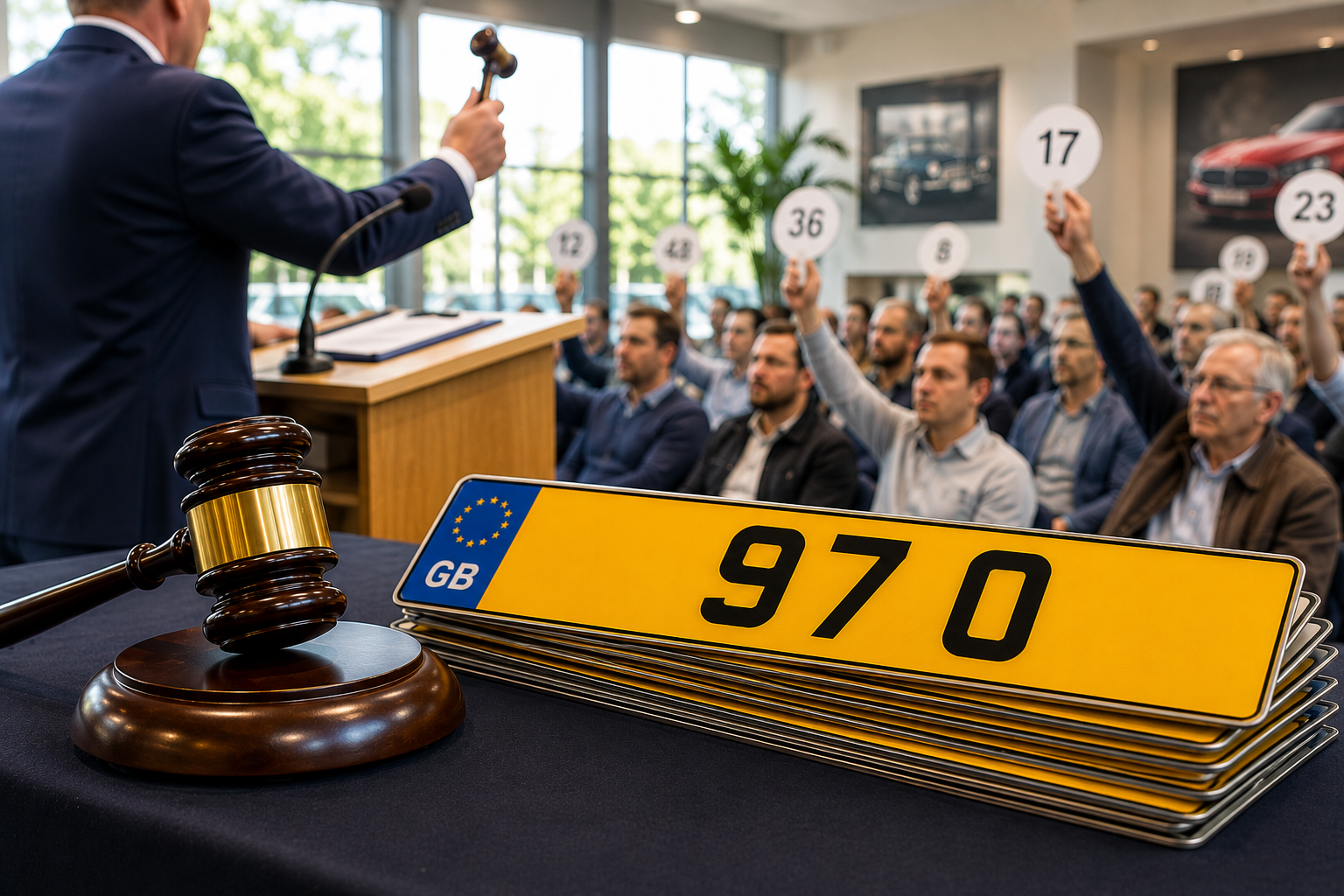

The July 2026 DVLA timed online auction raised a total of £5,575,340, with an exceptional sell-through rate across the 2,000 lots that were available. As is quite common place with DVLA auctions, dateless number plates completely dominated the high-end market, filling eight of the top ten spots and accounting for 61% of the total auction value - led by 97 0 at a hammer price of £90,010.
The headline story is not the sell-through rate, which has been consistently high all year. It is the composition of the top of the market. Eight of the ten most expensive registrations in this auction were dateless number plates, and dateless plates accounted for 61% of the total value of the sale despite making up just 35% of the lots sold.
This article breaks down the top 10 results, compares July against June’s auction, and explains what the numbers mean if you are planning to bid at a future number plate auction. If you are new to the process, our guide to how DVLA plate auctions work covers the mechanics first.
Contents
- July 2026 auction at a glance
- The top 10 plates sold in July 2026
- Why dateless number plates dominated the top of the market
- July versus June: prices cooled, demand did not
- The reserve price lesson
- What this means for your bidding strategy
- What to watch in the next number plate auction
- Frequently asked questions
July 2026 Auction at a Glance
| Measure | July 2026 result |
|---|---|
| Auction reference | B284 — July Timed Online Auction |
| Bidding window | 22 – 29 July 2026 |
| Registrations offered | 2,000 |
| Registrations sold | 1,974 (98.7%) |
| Registrations unsold | 26 |
| Total hammer value | £5,575,340 |
| Average sale price | £2,824 |
| Median sale price | £1,610 |
| Highest single sale | 97 O — £90,010 |
The gap between the £2,824 average and the £1,610 median is worth pausing on. It tells you the sale was pulled upward by a small number of exceptional lots. Two thirds of everything that sold went for under £2,500, and nearly a third changed hands for under £1,000. Headline prices make the news, but the bulk of a DVLA auction remains genuinely accessible.
The Top 10 Plates Sold in July 2026
| # | Registration | Hammer price | Reserve | Above reserve |
|---|---|---|---|---|
| 1 | 97 O | £90,010 | £2,500 | +3,500% |
| 2 | 1 VYR | £75,990 | £2,400 | +3,066% |
| 3 | AR52 NAL | £49,110 | £250 | +19,544% |
| 4 | IG 63 | £31,010 | £2,200 | +1,310% |
| 5 | 1 VYX | £30,110 | £2,400 | +1,155% |
| 6 | 570 LEN | £28,510 | £800 | +3,464% |
| 7 | ELL 110T | £25,010 | £250 | +9,904% |
| 8 | 542 A | £22,010 | £2,500 | +780% |
| 9 | 1115 P | £21,510 | £2,500 | +760% |
| 10 | 750 GT | £20,090 | £2,200 | +813% |
Those ten registrations carried a combined reserve of £18,000 and sold for £393,360 between them — almost 22 times their guide prices.
97 O — £90,010
The standout lot of the auction, and a textbook example of why short dateless registrations command the prices they do. Two digits, a single letter, and zero age restrictions make this format the most sought after plates for UK investors. At Right Reg we very rarely see combinations of this size so the fact that it went for close to 6 figures is no surprise. If you missed out on 97 O at the auction, you can skip the wait and the anxiety and view Right Reg Cherished Number Plate Stock to secure a classic investment today.
1 VYR and 1 VYX — £75,990 and £30,110
These two lots ran consecutively (1868 and 1869) and are a rare chance to see how buyers price near-identical plates. Same format, same reserve, same auction, and yet 1 VYR made two and a half times what 1 VYX did. The likely explanation is initials: the more plausible a three-letter combination is as somebody’s initials or a company abbreviation, the deeper the bidding pool. “Number 1” plates are always keenly contested.
AR52 NAL — £49,110
The most dramatic result of the sale in percentage terms. Offered at a £250 reserve and sold for £49,110 — roughly 196 times its guide price. Read as ARSENAL, it is a football plate with an enormous natural audience, and it demonstrates something important: the DVLA sets reserves by format, not by meaning. A current-style registration from 2002 attracts a low reserve regardless of what it happens to spell. Looking for your own name or team registration? Search our live stock database.
570 LEN and ELL 110T — £28,510 and £25,010
Both are name plates, and both illustrate the same principle from the other direction. ELL 110T reads as ELLIOT and carried the same £250 reserve as any other prefix-style plate. First-name registrations have a broad, emotionally motivated buyer base, and emotionally motivated bidders are the reason percentage uplifts like these happen.
IG 63, 542 A, 1115 P and 750 GT
The remainder of the top ten are all dateless, and all followed a similar pattern: reserves in the £2,200 – £2,500 band, final prices between seven and nine times that. 750 GT is the interesting one — a marque-adjacent plate, with obvious appeal to owners of a particular kind of car, showing how automotive relevance adds a premium of its own.
Why Dateless Number Plates Dominated the Top of the Market
Dateless number plates are registrations issued before the introduction of the suffix system in 1963, and they carry no character that reveals a vehicle’s age. That single characteristic makes them the most sought-after category of private plate in the UK, and July’s results show it clearly.
| Category | Lots sold | Average price | Share of auction value |
|---|---|---|---|
| Dateless registrations | 685 | £4,938 | 61% |
| All other formats | 1,289 | £1,701 | 39% |
Dateless plates sold for 2.9 times the average price of every other format in the same auction. Narrow it further and the effect becomes even sharper. The 20 registrations in the classic “number plus single letter” format — plates such as 97 O, 542 A and 202 G — averaged £15,919, more than five times the overall auction average.
Three factors drive this:
- Fixed supply. No new dateless registrations will ever be issued. Every plate that exists already exists, and each one assigned to a vehicle and never released reduces the pool permanently.
- Universal fit. A dateless plate can legally go on a vehicle of any age. Every other format can only be assigned to a vehicle at least as old as the plate implies, which limits the buyer pool.
- Classic car demand. Owners of older and classic vehicles specifically need a dateless registration if they want a private plate at all, which creates steady structural demand independent of fashion.
If you are considering a private plate primarily as a store of value rather than as decoration, this is the category where the supply argument is strongest. You can browse our full range of dateless number plates to see current availability and pricing.
July Versus June: Prices Cooled, Demand Did Not
| Measure | June 2026 | July 2026 | Change |
|---|---|---|---|
| Registrations offered | 2,000 | 2,000 | — |
| Registrations sold | 1,972 | 1,974 | +2 |
| Sell-through rate | 98.6% | 98.7% | +0.1pp |
| Total hammer value | £6,973,596 | £5,575,340 | −20.1% |
| Average sale price | £3,536 | £2,824 | −20.1% |
The 20% drop in average price from June to July isn't a sign that the private plate market is cooling down. It is purely down to catalogue mix on offer. Whilst the top selling plate reach a very high sale price, June had an unusually high number of premium dateless plates. However, for savvy buyers, months like July are actually the best time to snap up mid-tier name plates because the crowd's betting energy isn't hyper-focused on massive headline lots.
This is a more informative pair of numbers than either month on its own. Participation was effectively unchanged — two more lots sold, and the sell-through rate moved by a tenth of a percentage point. What changed was how much buyers paid, with the average price falling almost exactly a fifth.
A drop in average price alongside flat sell-through usually points to the mix of registrations on offer rather than to a weakening market. If a month happens to include fewer premium dateless plates, or fewer instantly readable names, the average falls even when the same number of bidders turn up with the same appetite. June’s catalogue simply contained more of the material that attracts five-figure bids.
For buyers the practical implication is encouraging: a month with a slightly thinner top end is often a better month to buy in the middle of the market, because attention and bidding pressure concentrate on fewer headline lots.
The Reserve Price Lesson
Across the whole sale, the 1,974 registrations that sold carried a combined reserve of £1,116,670 and made £5,575,340 — 399% above reserve in aggregate. Only 129 lots, about 7%, sold within 10% of their guide price.
The most extreme uplifts all shared one trait: a low reserve on a plate with an obvious meaning.
| Registration | Reserve | Sold for | Uplift |
|---|---|---|---|
| AR52 NAL | £250 | £49,110 | +19,544% |
| ELL 110T | £250 | £25,010 | +9,904% |
| C4 ARS | £200 | £14,410 | +7,105% |
| OEL 80Y | £300 | £18,010 | +5,903% |
| KAL 5A | £350 | £20,010 | +5,617% |
| A786 DAD | £200 | £11,010 | +5,405% |
The single most useful thing to understand about a DVLA auction is this: the reserve tells you almost nothing about what a plate is worth. Reserves are set from a formula based on registration format. The market prices meaning, memorability and demand, and the formula cannot see any of those things. A £200 reserve on a plate that spells a common word or a popular name is not a bargain waiting to happen — it is an invitation to a bidding war.
What This Means for Your Bidding Strategy
Five things July’s results should change about how you approach the next auction:
- Budget from comparables, not from the reserve. Before you bid, find what similar plates have actually sold for. The guide price is a starting point for the auction, not an estimate of value.
- Calculate your all-in cost first. The hammer price is not the total. Add the 3% buyer’s premium, VAT on the hammer price, and the £80 DVLA assignment fee. On a £5,000 hammer price you should be planning for roughly £6,200 all in.
- Expect competition on anything readable. If a plate spells a name, a word, a football club or a car marque, assume other people have spotted it. Set your ceiling before bidding opens and write it down.
- Look at the formats nobody is fighting over. Two thirds of July’s lots sold below £2,500. If you want a personalised plate rather than a specific plate, the middle of the catalogue is where the value sits.
- Read up before your first sale. If this would be your first auction, our first-time DVLA auction guide walks through registering, deposits and spending limits.
- Check the plate can go on your vehicle. You cannot make a vehicle look newer than it is. A 2015-style registration cannot be assigned to a 2010 car. Dateless plates are the only category that works on anything.
If you are unsure what your existing registration might be worth before you bid on a replacement, our free number plate valuation is a sensible first step, and our guide to what your number plate is worth explains how values are assessed.
What to Watch in the Next Number Plate Auction
Three things are worth tracking as the year continues:
Whether the dateless premium holds. Dateless plates have taken a disproportionate share of value in consecutive auctions. If that continues into the autumn sales, it confirms a structural trend rather than a one-month quirk.
Whether average prices recover. July’s 20% fall in average price looks like a catalogue effect. The next auction will show whether that reading is right — if the average bounces back with a stronger top end, the market itself is unchanged.
The sell-through rate as a health check. At 98.7%, effectively everything offered is finding a buyer. Any meaningful fall in that figure would be the first genuine sign of softening demand, and it would show up before prices did.
In the meantime, buying from an established dealer remains the alternative to waiting for the next sale. Auctions release a fixed catalogue on a fixed date; a dealer’s stock is available now, with a known price and no bidding risk. You can search our private number plates, browse personalised number plates, or view upcoming DVLA auction registrations at any time.
Summary
The July 2026 DVLA auction sold 1,974 of 2,000 registrations for £5,575,340. Average prices fell 20% against June while the sell-through rate held steady at 98.7%, pointing to a change in catalogue composition rather than a change in demand. Dateless number plates took 61% of the total value from 35% of the lots and filled eight of the top ten places, with 97 O leading the sale at £90,010. The widest gaps between reserve and result all came from low-reserve plates carrying obvious names or words — a reminder that DVLA reserves are set by format while the market pays for meaning.
Frequently Asked Questions
When did the July 2026 DVLA number plate auction take place?
The July 2026 DVLA auction, reference B284, ran as a timed online sale from 22 July to 29 July 2026.
How many number plates sold in the July 2026 DVLA auction?
Of the 2,000 registrations offered, 1,974 sold and 26 went unsold, giving a sell-through rate of 98.7%.
What was the most expensive plate in the July 2026 DVLA auction?
The highest result was 97 O, which sold for £90,010 against a reserve of £2,500. It is a dateless registration, the format that consistently attracts the strongest bidding.
How much did the July 2026 DVLA auction raise in total?
The combined hammer total was £5,575,340, at an average of £2,824 per registration sold and a median of £1,610.
Why are dateless number plates more expensive?
Dateless plates were issued before 1963 and contain no age identifier, so they can legally be assigned to a vehicle of any age. Supply is permanently fixed because no new dateless registrations are ever issued. In the July 2026 auction they sold for an average of £4,938 against £1,701 for all other formats.
What is a dateless number plate?
A dateless number plate is a UK registration issued before the suffix system began in 1963. It has no letter or number indicating the year of issue, typically taking a form such as 97 O, 542 A or IG 63.
Does the DVLA reserve price show what a plate is worth?
No. Reserves are set according to registration format, not meaning. In July 2026 the registrations that sold went for 399% above their combined reserve, and AR52 NAL sold for £49,110 against a £250 reserve.
What is the difference between the hammer price and what I actually pay?
The hammer price is the winning bid. Your total cost adds a 3% buyer’s premium, VAT on the hammer price, and the £80 DVLA assignment fee. Budget roughly 24% above your intended hammer price.
Can I put any DVLA auction plate on my car?
No. A registration cannot make a vehicle appear newer than it is, so a plate with a 2015 age identifier cannot be assigned to a 2010 vehicle. Dateless registrations carry no age identifier and can be assigned to a vehicle of any age.
How often are DVLA number plate auctions held?
The DVLA holds timed online auctions throughout the year, typically monthly, each offering around 2,000 previously unissued registrations.
Are DVLA auctions cheaper than buying from a dealer?
Sometimes, but not reliably. Two thirds of July 2026 lots sold below £2,500, yet plates with obvious appeal routinely sold for many multiples of their guide price. A dealer offers a known price and immediate availability; an auction offers a fixed catalogue with an uncertain final cost.
What made some July 2026 plates sell for so much above reserve?
Every one of the largest uplifts involved a low-reserve registration that spelled a recognisable name, word or brand — AR52 NAL as ARSENAL, ELL 110T as ELLIOT, C4 ARS as CARS. Because reserves are formula-based, meaningful plates in cheaper formats start far below their market value.