
Last updated: 8 September 2026
TL;DR: From 1 September 2026 every new car registered in England, Scotland and Wales carries a 76 age identifier, and it stays that way until 28 February 2027. The 76 comes from a simple rule that has run since 2001: March plates use the year number, September plates add 50. If you want a personalised plate with 76 in it, almost everything available today is a dateless registration rather than a current-style one — which is good news, because dateless plates fit any vehicle regardless of age. On Right Reg's live stock on 8 September 2026 there were 79 registrations containing 76, starting at £1,580, and DVLA charges £80 to put one on a car.
Contents
- What does a 76 plate mean?
- When did 76 plates start, and when do they end?
- How do you read a current-style UK number plate?
- Why is it 76 and not 26?
- Can I put a 76 plate on an older car?
- What 76 plates can you actually buy right now?
- What does it cost to buy and fit a 76 plate?
- Is September a good or bad time to buy a private plate?
- How do I get a 76 plate onto my new car?
- Frequently asked questions
What does a 76 plate mean?
A 76 plate is a UK registration whose two middle digits are 76, which tells you the vehicle was first registered between 1 September 2026 and 28 February 2027. It is the second of the two 2026 identifiers: cars registered from 1 March to 31 August 2026 carry 26 instead.
Those two digits are called the age identifier, and DVLA issues a new one twice a year, on 1 March and 1 September. It is the only part of a standard registration that tells you how old the vehicle is.
From 30 years in the trade: the September changeover is the busiest fortnight of our year, and it is almost entirely driven by new-car deliveries. People collect a brand-new car, notice the plate, and start wondering what their own initials would cost. That is the whole reason this month matters to plate buyers — not the 76 itself.
When did 76 plates start, and when do they end?
| Registered between | Age identifier |
|---|---|
| 1 March 2026 – 31 August 2026 | 26 |
| 1 September 2026 – 28 February 2027 | 76 |
| 1 March 2027 – 31 August 2027 | 27 |
| 1 September 2027 – 29 February 2028 | 77 |
| 1 March 2028 – 31 August 2028 | 28 |
| 1 September 2028 – 28 February 2029 | 78 |
The twice-yearly changeover has run since 1999, and the current two-letter, two-digit, three-letter format was introduced on 1 September 2001.
How do you read a current-style UK number plate?
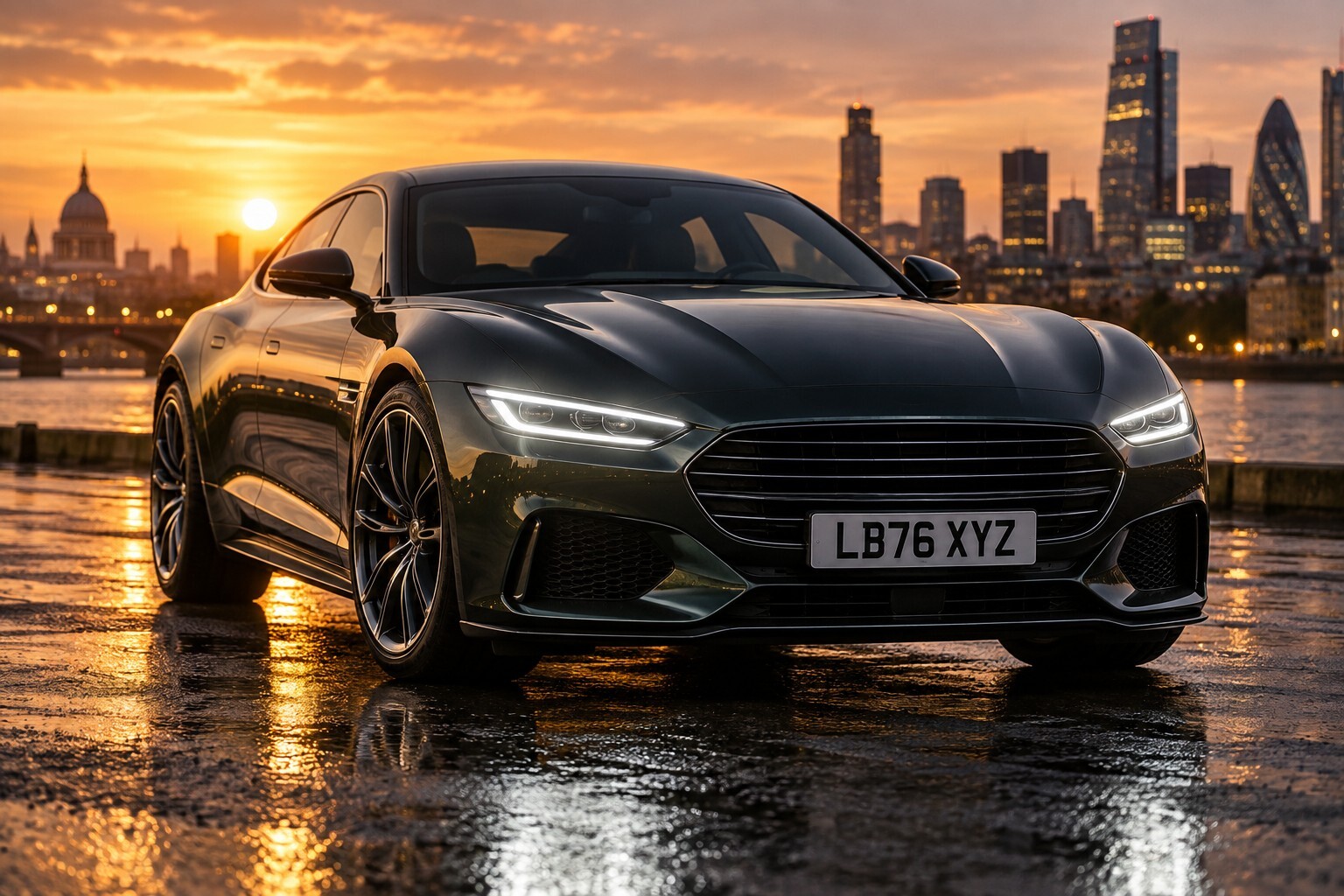
Take a registration like LB76 XYZ. It breaks into three parts, and DVLA sets out all three in its own guide, INF104:
| Part | Example | What it tells you |
|---|---|---|
| Two-letter memory tag | LB | Where the vehicle was first registered — L is the London area, LA to LY covering Borehamwood, Sidcup and Wimbledon |
| Two-digit age identifier | 76 | When it was registered — here, September 2026 to February 2027 |
| Three random letters | XYZ | Nothing at all. They are issued at random to keep each registration unique |
Two details catch people out. I, Q and Z are never used in memory tags — Z appears only as one of the three random letters. And Northern Ireland registrations work differently: they carry a letter code for the area but no age identifier at all, which is why an NI plate never dates your car.
If you want the full picture of every format the UK has used, our UK number plate format explained guide covers all of them, and prefix number plates explained covers the 1983 to 2001 letter system in detail.
Why is it 76 and not 26?
Because September plates add 50 to the year. It is a deliberate piece of design: it gives DVLA two distinct identifiers a year from a single two-digit number, and it means you can tell at a glance whether a car was registered in the spring half or the autumn half of its year.
- March 2026 → 26
- September 2026 → 26 + 50 = 76
- March 2027 → 27
- September 2027 → 27 + 50 = 77
Trade tip: the rule keeps working until 2050, when the March identifier would be 50 and collide with the September 2000 identifier. DVLA will have to change something before then, but nothing has been announced, so treat 2050 as a curiosity rather than a planning issue.
Can I put a 76 plate on an older car?
No — and this is the single most common misunderstanding of the September release.
The rule is that a registration can make a vehicle look older than it is, but never newer. A 76 identifier says "first registered from September 2026", so it can only be assigned to a vehicle first registered on or after 1 September 2026. Put the other way round: your new 76-reg car can legally wear almost any older plate you like — a prefix plate, a suffix plate, or a dateless one — but a 2020 car can never wear a 76 plate.
This is why the plates people actually buy in September are rarely current-style at all.
What 76 plates can you actually buy right now?
We pulled our own live stock on 8 September 2026. There were 79 registrations containing 76, and the format breakdown is telling:
| Format | Example | How many | Fits which cars |
|---|---|---|---|
| Three letters then 76 | BHZ 76 | 32 | Any age of vehicle |
| 76 then three letters | 76 HEL | 26 | Any age of vehicle |
| 76 then two letters | 76 HW | 19 | Any age of vehicle |
| Two letters then 76 | — | 1 | Any age of vehicle |
| Current style (LB76 XYZ) | — | 0 | Only cars registered from September 2026 |
Every single one is a dateless registration — a format with no age identifier, so it can go on a vehicle of any age. Prices ran from £1,580 for BHZ 76 up to £155,580, with 12 further plates priced on application. Our dateless number plate guide explains why these formats hold their value so well.
If you specifically want a current-style plate on the new 76 series — something like LB76 with your initials — those combinations come from DVLA's own sales of newly released registrations rather than from dealer stock, and you can browse what is coming up through our DVLA auction search.
Expert note: prices and availability in the table above were correct on the morning of 8 September 2026 and stock moves daily during the release period. Check the current figure on the number plate finder before you set your budget.
What does it cost to buy and fit a 76 plate?
There are two separate costs, and people routinely forget the second one.
| Cost | Amount | Who you pay |
|---|---|---|
| The registration itself | From £1,580 in our 76 stock on 8 September 2026 | The seller |
| DVLA assignment fee | £80 | DVLA, per GOV.UK |
| Putting a plate on retention instead of a car | £80 | DVLA, per GOV.UK |
| Physical plates made up | Varies by supplier | A registered number plate supplier |
The £80 assignment fee is fixed and unavoidable. If you buy a registration but are not ready to put it on a vehicle, you hold it on a retention document instead, which also costs £80 — and if you later decide never to assign it at all, GOV.UK notes you may be able to reclaim £80.
Is September a good or bad time to buy a private plate?
Both, depending on what you are buying.
In your favour: the release puts number plates in front of a very large audience at once, so sellers list more stock and there is more choice than in a quiet month like January.
Against you: that same attention firms up asking prices on the obvious names and initials. If you have your heart set on a common first name or a three-letter set matching your initials, you are shopping in the busiest fortnight of the year.
Our honest view after three decades of Septembers: if you are buying a plate to keep and enjoy, buy when you find the right one and do not try to time the market — the difference a quiet month makes is smaller than the difference between the right plate and a near miss. If you are buying with an eye on value, read number plates as an investment first and be sceptical of anything sold to you as a guaranteed return.
How do I get a 76 plate onto my new car?
- Check the plate is legal for your vehicle. A 76 identifier needs a car first registered on or after 1 September 2026. A dateless plate needs no such check.
- Confirm what you are buying. You want either a V750 certificate of entitlement or a V778 retention document in your name, or a registration currently sitting on a vehicle that is being transferred to you.
- Apply to DVLA to assign it, paying the £80 fee. You can do this online in most cases.
- Wait for the paperwork, then have physical plates made up by a registered number plate supplier, who will need to see your ID and proof of entitlement.
- Fit the plates and keep the originals safe — you will need them if the private plate ever comes off.
- Tell your insurer the registration has changed. Most treat it as an administrative change, but do not skip it.
Our step-by-step transfer guide walks through each stage with the exact forms, and the complete buyers guide covers what happens when you later sell the car.
Trade tip: if your new 76-reg car is on order rather than on the drive, buy the plate onto a retention document first. Then you are assigning a plate you already own on delivery day, instead of racing the paperwork.
Frequently asked questions
What does a 76 plate mean?
A 76 plate is a UK registration with 76 as its two middle digits, which shows the vehicle was first registered between 1 September 2026 and 28 February 2027. The two digits are the age identifier, and DVLA issues a new one every March and September.
When did 76 plates come out?
76 plates came into use on 1 September 2026 and apply to every new vehicle registered in England, Scotland and Wales until 28 February 2027. The 27 identifier follows on 1 March 2027.
Why do September plates add 50 to the year?
Adding 50 gives DVLA two different age identifiers from one year number, so a car registered in March 2026 shows 26 and one registered in September 2026 shows 76. The same rule produces 27 and 77 in 2027.
Can I put a 76 number plate on an older car?
No. A registration can make a vehicle appear older than it is but never newer, so a 76 plate can only be assigned to a vehicle first registered on or after 1 September 2026. If you want a personalised plate for an older car, choose a dateless registration, which carries no age identifier at all.
How much does a 76 number plate cost?
On Right Reg's live stock on 8 September 2026 there were 79 registrations containing 76, priced from £1,580 up to £155,580, with a further 12 available on application. DVLA then charges a fixed £80 fee to assign the registration to a vehicle.
Do I have to pay anything to DVLA as well as the seller?
Yes. DVLA charges £80 to assign a private registration to a vehicle, and £80 to put one on a retention document if you are not ready to assign it. Physical number plates are a separate cost paid to a registered number plate supplier.
Do Northern Ireland plates have an age identifier?
No. Northern Ireland registrations use a letter code for the area of issue but carry no age identifier, which is why they can be assigned to a vehicle of any age. That is one reason dateless Northern Ireland style plates are popular as personalised registrations across the UK.
Which letters are never used in a memory tag?
DVLA does not use I, Q or Z in the two-letter memory tag at the start of a current-style registration. Z appears only among the three random letters at the end, and existing Q marks are still issued separately for vehicles of uncertain age.